
03. November 2026, 10:54 o'Clock
Article: DIFFERENT TRACKS Mexico: Freight transport looking north
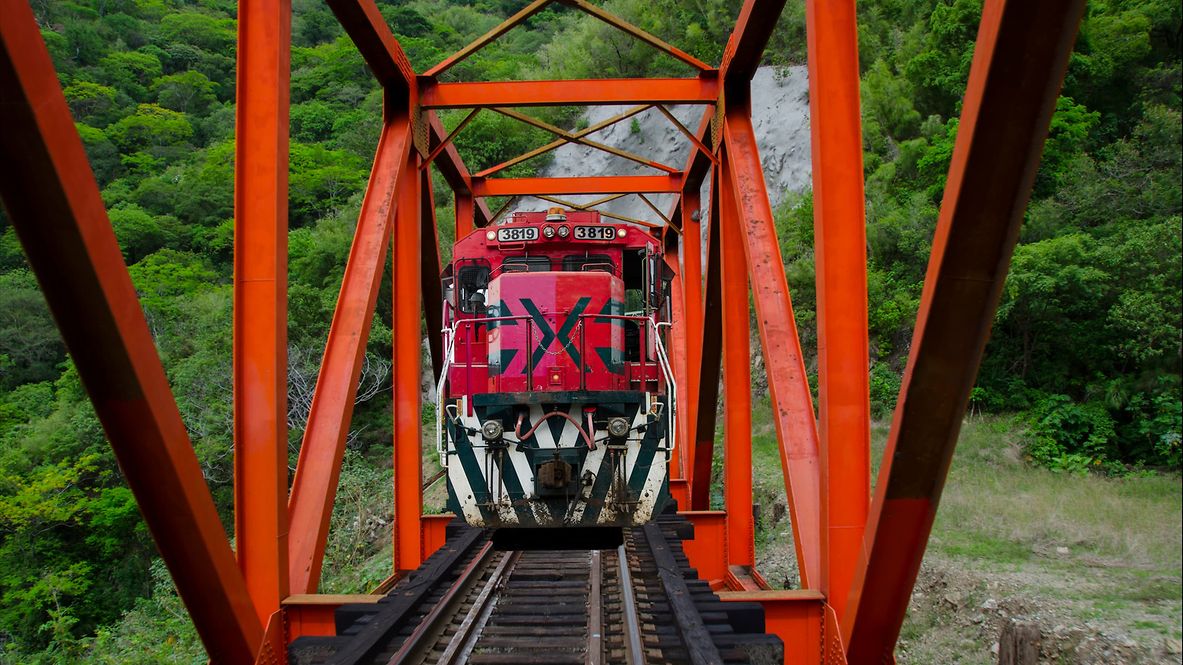
Mexico’s railway connects industry, ports and the US market. Regional operators and new freight corridors shape the rail network.
A rail system for major freight flows
Mexico is one of North America’s major industrial locations. The country’s economic centres are connected to ports, border crossings and markets by an extensive railway network. Unlike in many European countries, however, the network is less characterised by a dense web of branch lines. Freight traffic is concentrated primarily on major trunk routes between industrial centres, ports and border crossings into the United States.
Foreign trade plays a particularly important role. Mexican production sites are closely integrated with North American industry. The rail network connects them to the US border, major seaports and international trade routes. This creates large, regular freight flows between production sites, ports and border crossings into the United States.
The 2024 figures show just how important foreign trade is to rail freight. Around 96 million tonnes of the total 132.7 million tonnes carried by rail were attributable to foreign trade, equivalent to approximately 72.4 per cent.
Key figures at a glance
| Indicator | Value |
|---|---|
Total rail freight in 2024 | 132.7 million tonnes |
| Of which foreign trade | 96.0 million tonnes |
| Share accounted for by foreign trade | 72,4 % |
| Length of Mexico’s railway network | 28.864 km |
| Of which privately concessioned | approx. 18,000 km |
| Rail border crossings into the United States | 8 |
Traffic figures relate to the 2024 calendar year. Network length and the number of border crossings are stated as at the end of 2025.
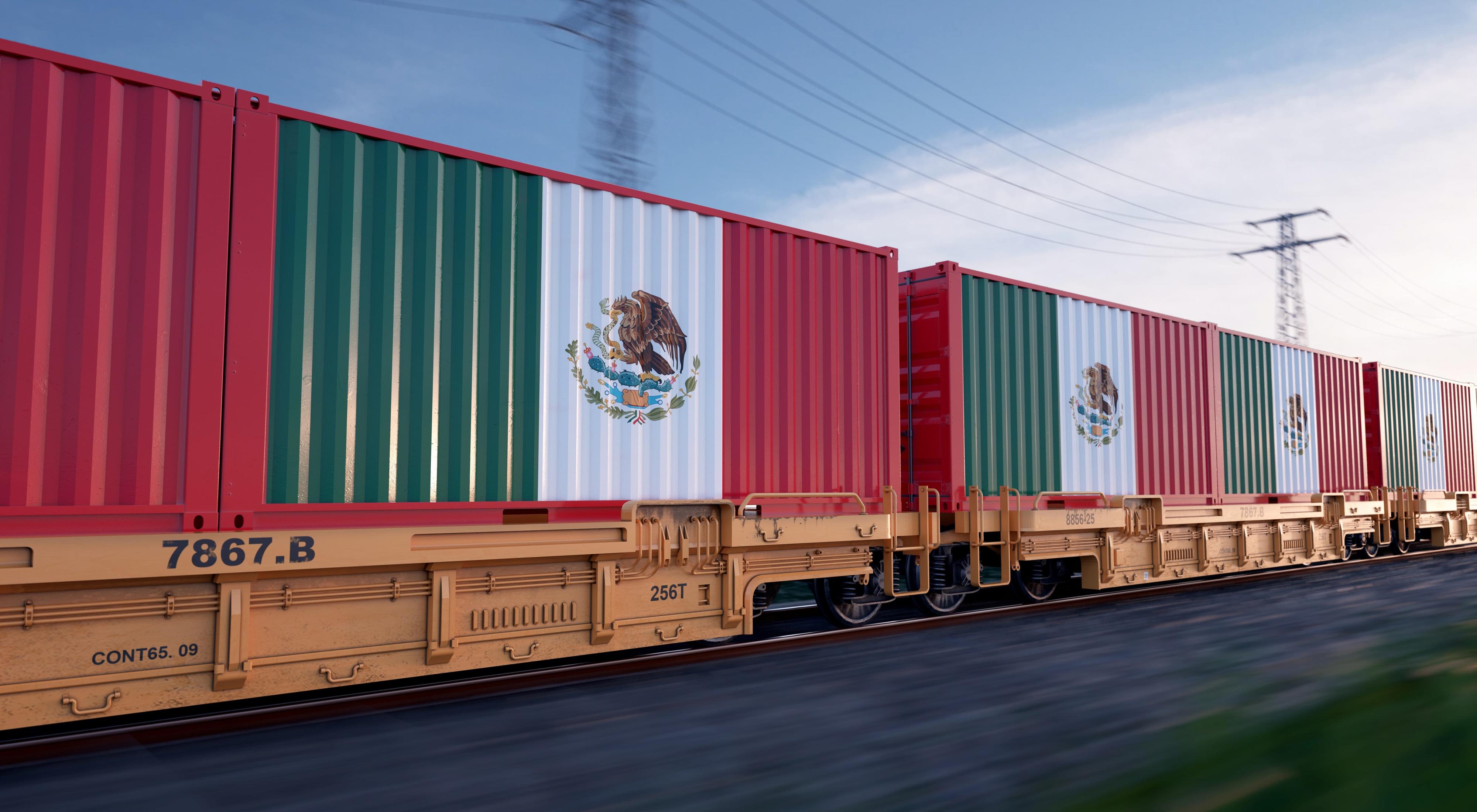
Across Mexico by rail: Container traffic links production sites, ports and international markets.
What do Mexico’s freight railways carry?
The goods actually transported are closely linked to the country’s economic structure. In 2024, industrial goods accounted for around 48 per cent of rail freight and were therefore the largest commodity group. Operators serve sectors including the automotive, chemicals and fertilisers, cement and energy industries. Metals and minerals, agricultural products, petroleum and petroleum products, as well as intermodal transport, also play an important role.
Regional networks rather than a single operator
Mexico’s railway network is now operated by several companies active in different regions. This structure dates back to the reorganisation of the formerly heavily state-dominated system in the 1990s. The granting of concessions laid the foundations for private investment and a more regionally focused rail operation.
The major concession holders each operate different regional networks and serve different economic areas of the country. On routes spanning several networks, different responsibilities and operating procedures therefore come together. Whether a change of operator is required and how the consignment continues depends on the specific transport route.
The private operator structure is now being supplemented by new government planning and regulatory approaches. These include the Agencia de Trenes y Transporte Público Integrado, or ATTRAPI. Its responsibilities include planning, regulating and developing the railway system.
The border as a gateway to the US network
Mexico’s rail freight sector is closely connected to the US railway system. At the border, the operating and clearance processes of the railways and authorities involved come together. These include customs formalities, security checks and arrangements for onward transport on the US network.
For each transport route, it is therefore important to know which operators are involved and how the consignment is transferred between the Mexican and US networks.
Ports as links to international markets
Ports are also key hubs for Mexican freight transport. They handle goods arriving in Mexico from abroad or being loaded onto ships for export. Rail and road links provide transport between the ports and Mexico’s production and economic regions.
According to Proyectos México, 69 per cent of the ports managed by the Administraciones del Sistema Portuario Nacional, or ASIPONAS, have a rail connection. For freight transport, however, the way these connections link to the wider rail network and terminals is also important. Port connectivity therefore remains a key factor in linking sea and land transport.
New corridors in the south
A current development priority is to improve the south-east’s connection to the national railway network. The Tren Maya rail link is already in passenger service. Freight infrastructure is also being developed, including multimodal freight facilities and additional track connections.
This is intended to facilitate regional transport and create links to existing rail and port infrastructure. The expansion complements the established connections in the north and broadens the options for freight transport in the south-east.
Lessons from Mexico
Mexico’s rail freight system follows the country’s economic relationships. In the north, rail is closely integrated into supply chains with the United States. On the coasts, ports act as interfaces between international maritime transport and Mexican land transport. In the south, new and expanded links are intended to connect further regions to the national transport network.
Mexico’s example shows that the performance of a railway system depends on more than its main routes. The links between regional networks, the handover points between the operators involved and connections to ports and terminals are equally important. In cross-border and multimodal transport in particular, these interfaces help determine how a transport chain can be organised and continued.
Sources
- Agencia Reguladora del Transporte Ferroviario: Anuario Estadístico Ferroviario 2024
- Proyectos México: Ferrocarriles
- Ferromex: Industries we serve
- Grupo México Transportes: Industries and connections
- U.S. Bureau of Transportation Statistics: Border Crossing Data
- Secretaría de Infraestructura, Comunicaciones y Transportes: Programa Institucional de la ATTRAPI 2026–2030
- Diario Oficial de la Federación: Constitutional reform of 30 October 2024
- Proyectos México: Tren Maya
- Secretaría de Marina / Gobierno de México: Corredor Interoceánico del Istmo de Tehuantepec
Note: No personal data is collected when submitting feedback. Feedback is processed anonymously. DB Cargo Privacy Notice

 Go