
18. August 2026, 11:51 o'Clock
Article: CO₂ logistics: DB Cargo is ready
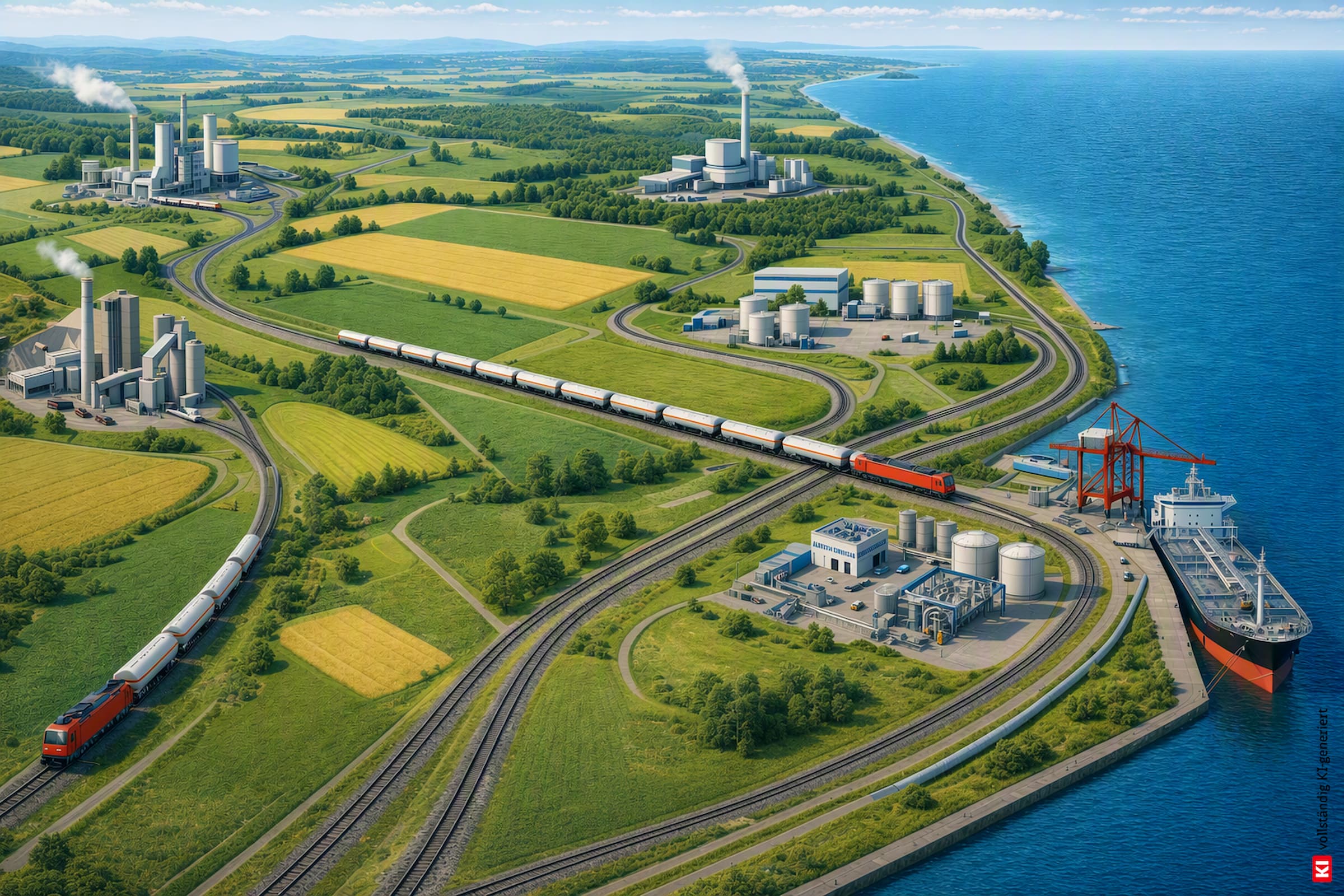
The rail network connects industrial sites with Europe’s CO₂ infrastructure.
Many industrial companies face the same challenge: they want to produce in a more climate-neutral way, but cannot completely avoid certain CO₂ emissions. This is because, particularly in so-called ‘hard-to-abate’ industries such as the cement or lime industries, CO₂ is generated not only through energy consumption but also directly during the production process. When this CO₂ is captured directly at the point of origin, the process is known as carbon capture. However, capture alone does not solve the problem – it shifts the focus to the next crucial question: transportation.
The success of carbon management on an industrial scale hinges precisely on this: it requires not only capture facilities, but also efficient transport chains. Only when the captured CO₂ finds its way to utilisation or permanent storage can carbon management have its full effect.
DB Cargo brings the European network, the logistics expertise and the experience needed to establish efficient CO₂ transport chains and scale them up in line with market demand. As early as the start of the 2030s, around five million tonnes of captured CO₂ could be transported in Germany each year. In a multimodal scenario, rail can handle a large proportion of this. As volumes continue to rise, CO₂ logistics is evolving into a new European value chain – and rail will play a central role in this from the very outset.
A brief explanation: What lies behind carbon management
CO₂CO₂ (carbon dioxide) is a greenhouse gas produced, amongst other things, during energy generation and in industrial production processes – such as the manufacture of cement or lime.
Carbon CaptureCarbon capture involves capturing CO₂ directly at the source, before it enters the atmosphere.
Carbon ManagementCarbon management describes the entire process: capturing CO₂, transporting it and then utilising it or storing it permanently.
CCS – Carbon Capture and Storage: The CO₂ is captured and then permanently stored.
CCU – Carbon Capture and Utilisation: The captured CO₂ is reused as a raw material.
CCUS – Carbon Capture, Utilisation and Storage: This term encompasses both approaches: the utilisation and the permanent storage of captured CO₂.
Rail is accelerating the roll-out
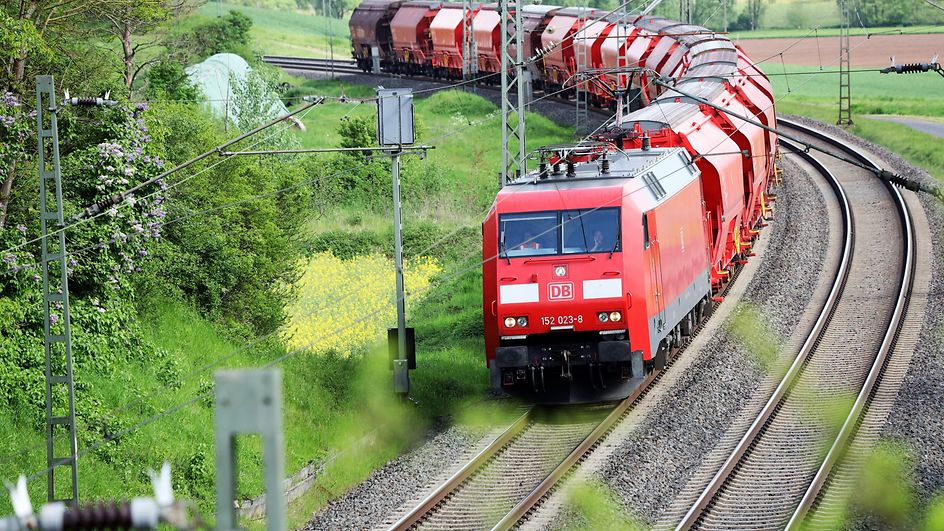
Rail-based CO₂ logistics is already possible today. The existing network connects industrial sites with hubs, ports and European corridors. Transport operations can begin as soon as capture facilities, CO₂-compatible freight wagons and the necessary connecting infrastructure at both the source and the sink are in place. Rail thus offers industry an efficient solution for establishing new CO₂ value chains right from the start.
Its strength lies in its flexible scalability: transport capacities can be built up gradually, volumes expanded as required, and individual sites reliably connected. This is particularly crucial for Germany’s decentralised industrial structure. Around 25 per cent of the potential CO₂ volumes come from sites located more than 40 kilometres from the intended core CO₂ network. For many industrial sites, rail therefore remains the key link to hubs, ports and storage sites in the long term.
Rail will play a distinct role in the future CO₂ transport system: it will serve sites, consolidate volumes and connect sources with terminals, ships and pipelines. This will create an efficient multimodal network in which each mode of transport plays to its strengths. Rail is not merely a stopgap until pipelines are built, but a permanent component of Europe’s CO₂ infrastructure.
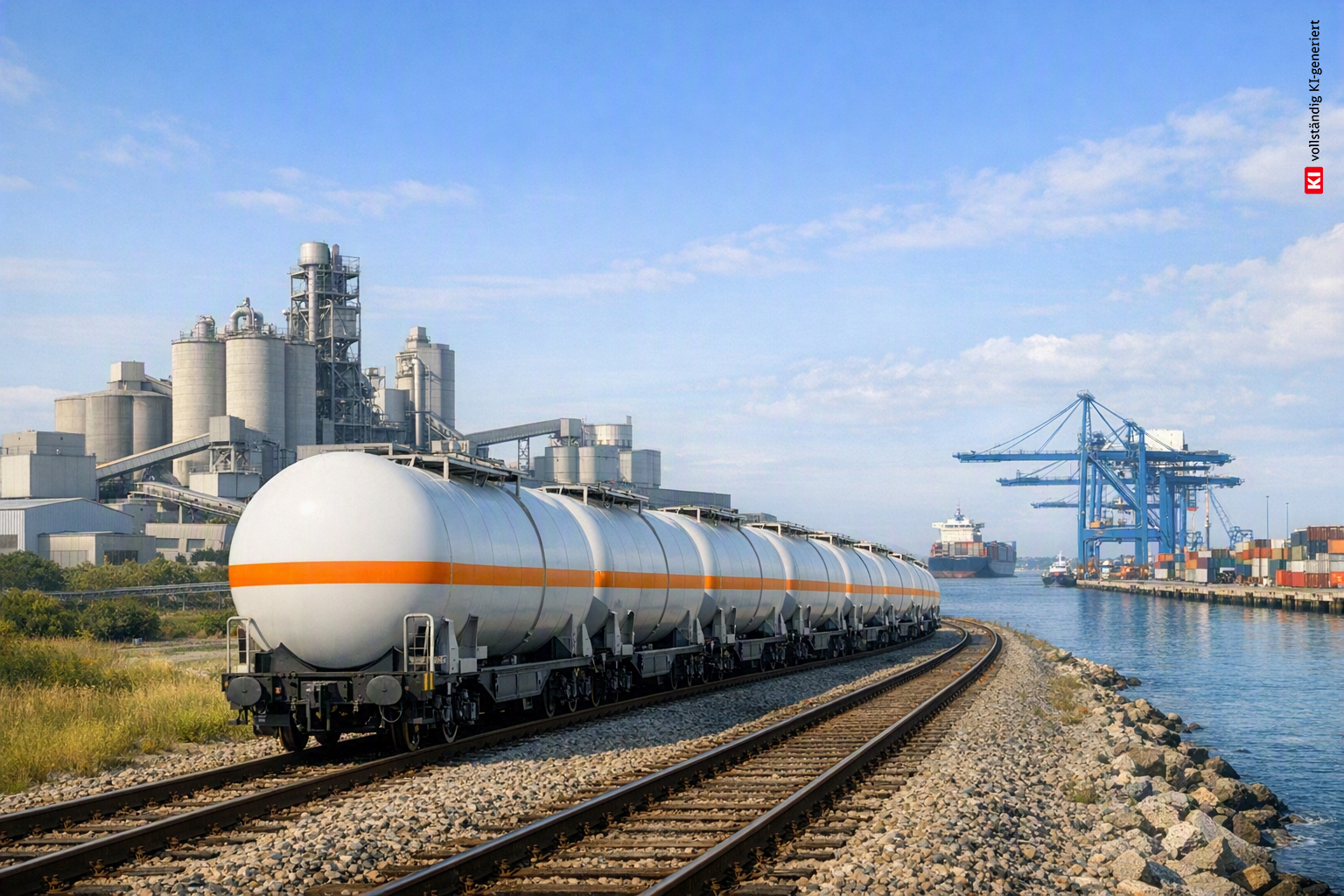
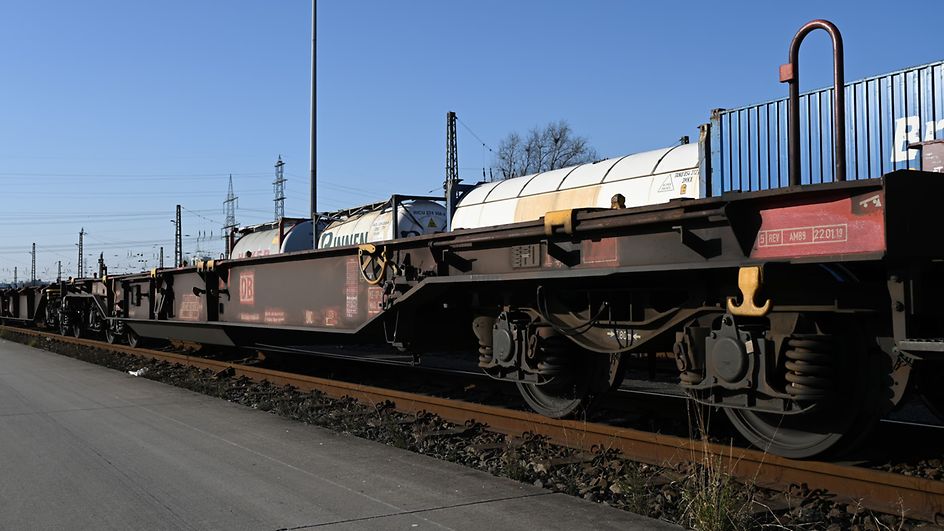
Ready for ramp-up: Specially insulated tank wagons enable the reliable transport of large quantities of CO₂ by rail.
A brief explanation: How CO₂ is transported by rail
For transport, captured CO₂ is liquefied and loaded into specially insulated tank wagons at around –30 degrees Celsius and a pressure of 12 to 15 bar. One wagon can hold around 60 tonnes of CO₂. Freight trains transport these quantities from industrial sites to hubs, ports, storage sites or transfer points for pipelines. There, depending on the subsequent transport chain, the CO₂ is temporarily stored, transhipped or prepared for onward transport by ship or pipeline. In this way, rail links carbon capture directly to utilisation or permanent storage.
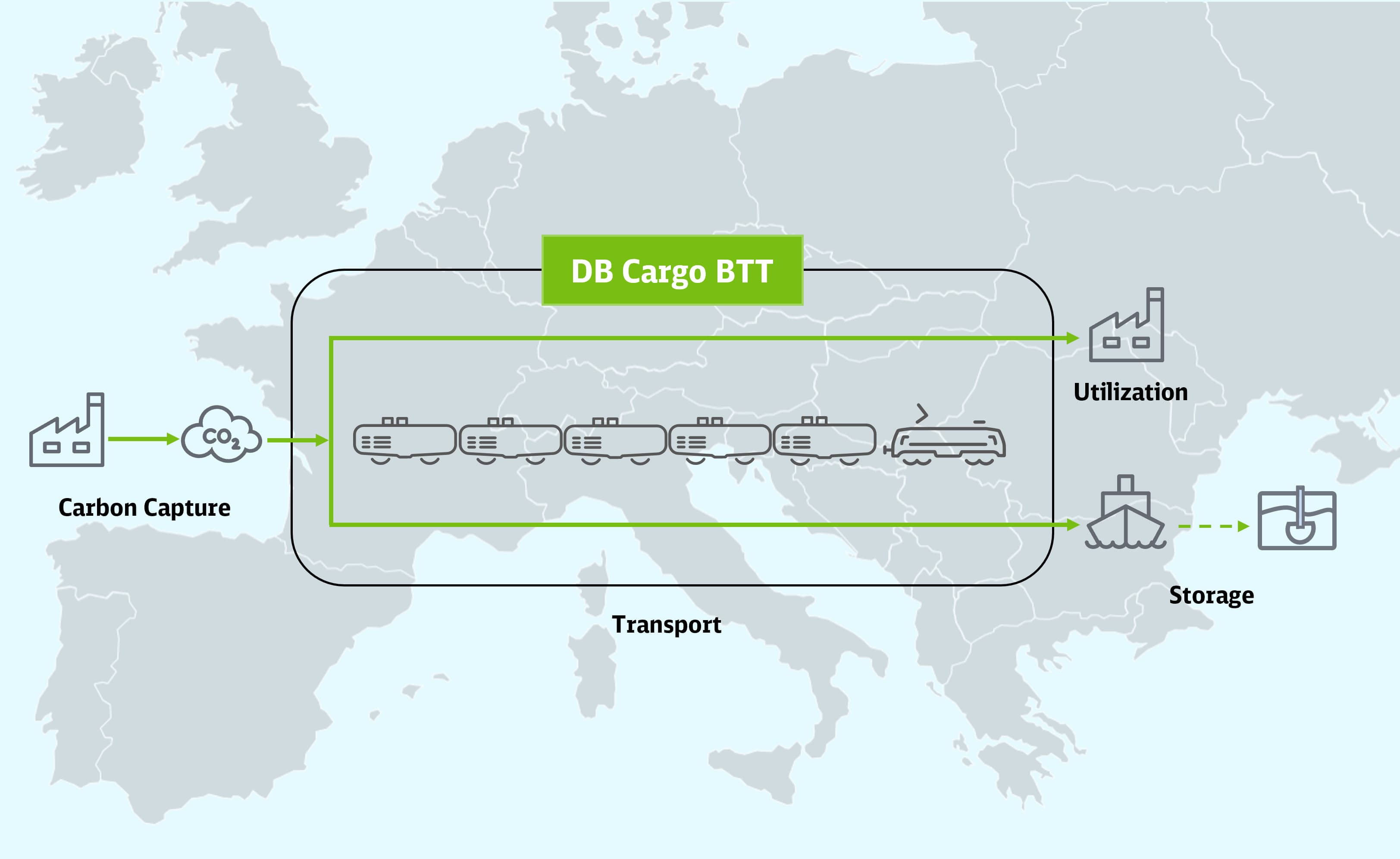
From capture to utilisation or storage: DB Cargo takes CO₂ logistics onto rails.
DB Cargo brings CO₂ logistics to the railways
DB Cargo has the experience, the network and the logistical expertise to establish safe CO₂ transport chains. The company develops suitable transport concepts and manages connections across national borders and different modes of transport. In doing so, DB Cargo draws on its long-standing expertise in the transport of dangerous goods and bulk cargo, as well as on established multimodal processes.Three years after the final investment decision for the first German CCS projects, DB Cargo is able to build up transport capacity of around four million tonnes of CO₂ per year – reliably, carefully and across Europe. As demand grows, this capacity can be expanded as required. DB Cargo thus offers industry a scalable logistics solution for the ramp-up of carbon management.
“Carbon management will only be a success if logistics are taken into account from the very beginning. It is now essential to work with industry and policymakers to create the conditions for reliable CO₂ transport chains. We want to play an active role in shaping this new market.”

CO₂ logistics is a European endeavour: DB Cargo is developing connections to storage and export routes in the Netherlands, Denmark and Norway. It is crucial that rail sidings, wagon fleets and transhipment capacities are developed in parallel with the carbon capture projects.
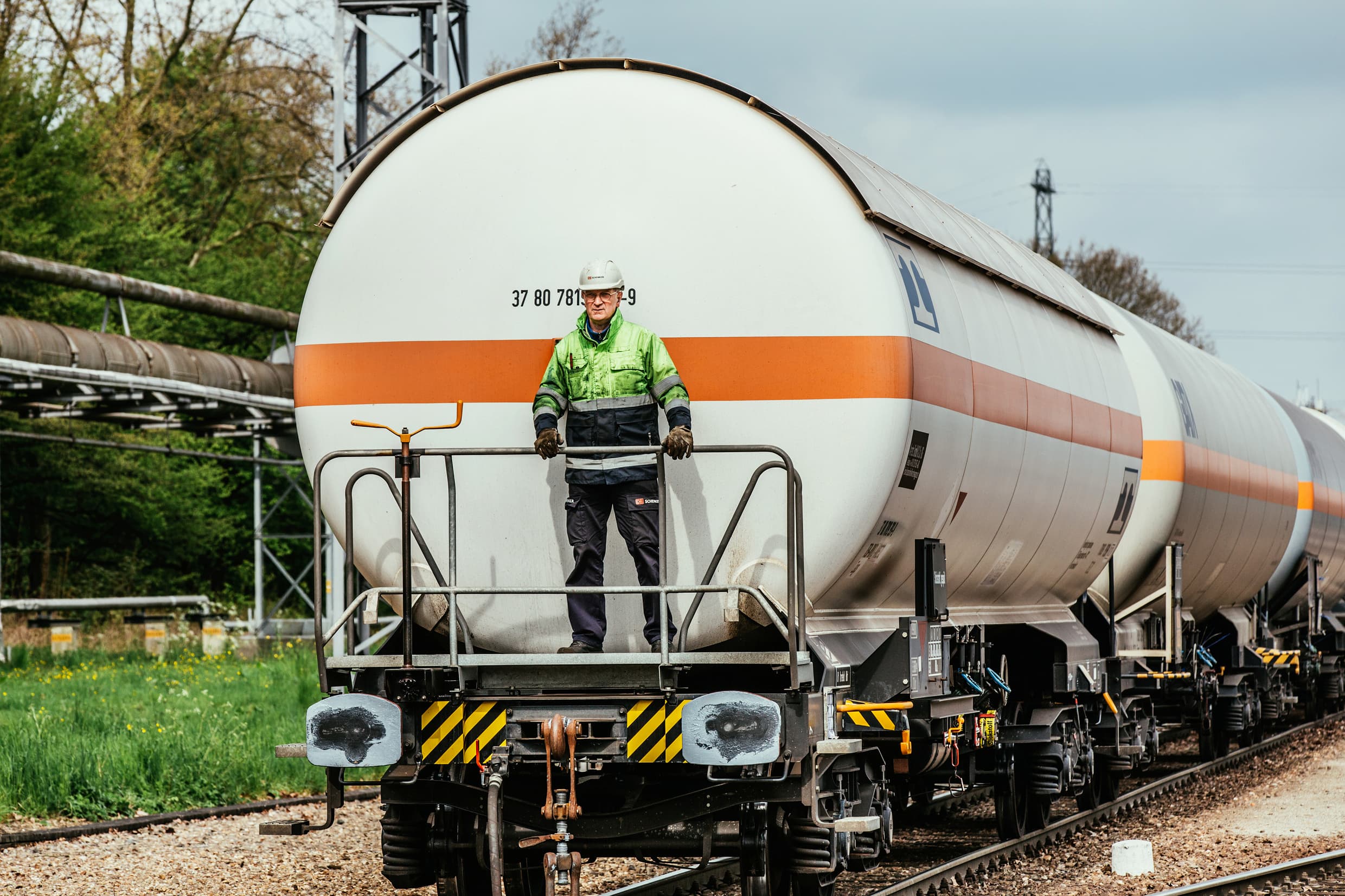
The rail network is ready. So is DB Cargo.
Now, market potential must be turned into robust transport chains. This requires clear approval and liability rules, the targeted expansion of infrastructure, and reliable financing and investment conditions. Capture, transport, utilisation and storage must be planned jointly from the outset. DB Cargo stands ready to play an active role in shaping this ramp-up.
Note: No personal data is collected when submitting feedback. Feedback is processed anonymously. DB Cargo Privacy Notice
 Go
Go