
28. July 2026, 11:49 o'Clock
Article: Europe-wide network realigned
Stellantis and DB Cargo focus on strong corridors and flexible shuttle services
European vehicle logistics is being rethought: Stellantis and DB Cargo Automotive are consistently aligning their network toward efficiency and stability. The focus is now on high-volume corridors and high-frequency services – for greater speed, improved planning reliability, and significantly more resilient supply chains.
From short-term deployment to a strong network
The groundwork of today’s collaboration was laid several years ago during a period of major challenges. The market was characterized by capacity shortages – limited space at compounds, backlogs extending into seaports, and disruptions along the supply chain. Together with Stellantis, DB Cargo Automotive responded flexibly, taking on short-term transport services across numerous routes throughout Europe – precisely where demand was most urgent.
During this intensive phase, both sides developed a deep mutual understanding – of the requirements of individual plants, the different brands and vehicle types, and the possibilities of rail transport. This shared knowledge now forms the basis for strategically advancing vehicle logistics across Europe.
Instead of many individual relations, the partners are now focusing specifically on key connections: between Poland and Belgium, Slovakia and Germany, within France, and along the corridor between Spain and Germany. On these axes across Europe, high-frequency shuttle systems ensure reliable scheduling. Large vehicle flows can be efficiently bundled and managed, giving Stellantis exactly the flexibility required in a dynamic production and distribution environment.
“By focusing on the key corridors across Europe, we are creating a robust network with short response times and high planning reliability for our customer.”
Andreas Weiss, Head of Sales and Solution Design International Accounts at DB Cargo Logistics.
Higher volumes, maximum flexibility on rail
The realignment is delivering results: in 2025, DB Cargo Automotive transported more than 50,000 vehicles for Stellantis, with over 80,000 planned for 2026. The range includes compact models such as the Citroën C3 Aircross, Jeep Avenger, and Opel Frontera, as well as light commercial vehicles such as the Fiat Ducato and Peugeot Boxer.
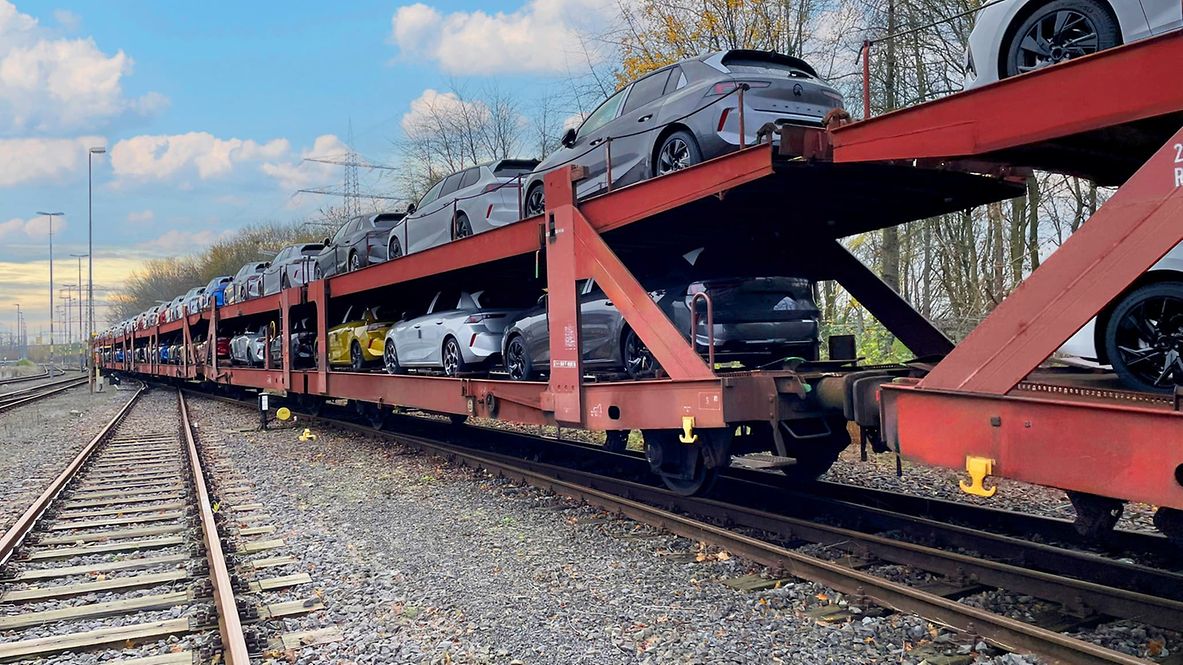
This level of diversity has become standard in automotive production – as many plants now produce different models simultaneously on a single line. For logistics, this means transport must be just as flexible as production itself. DB Cargo Automotive therefore relies on modern car carrier wagons that can efficiently combine a wide variety of vehicle types, enabling different sizes, weights, and body styles to be optimally consolidated on one train.
Resilient processes through shuttles and compounds
A key element of the new network is shuttle services operating in fixed cycles. They connect plants and logistics hubs within clearly structured processes, ensuring high reliability in day-to-day operations. Average transit times are fast and dependable, typically two to three days.
An additional factor contributing to stability lies on the customer side: Stellantis’ own compound facility in Rüsselsheim. This dedicated space allows vehicles to be stored flexibly and enables transport flows to be managed independently of frequently constrained external parking capacities.
The result is a robust overall system that functions reliably even with fluctuating volumes – while remaining responsive to new requirements.
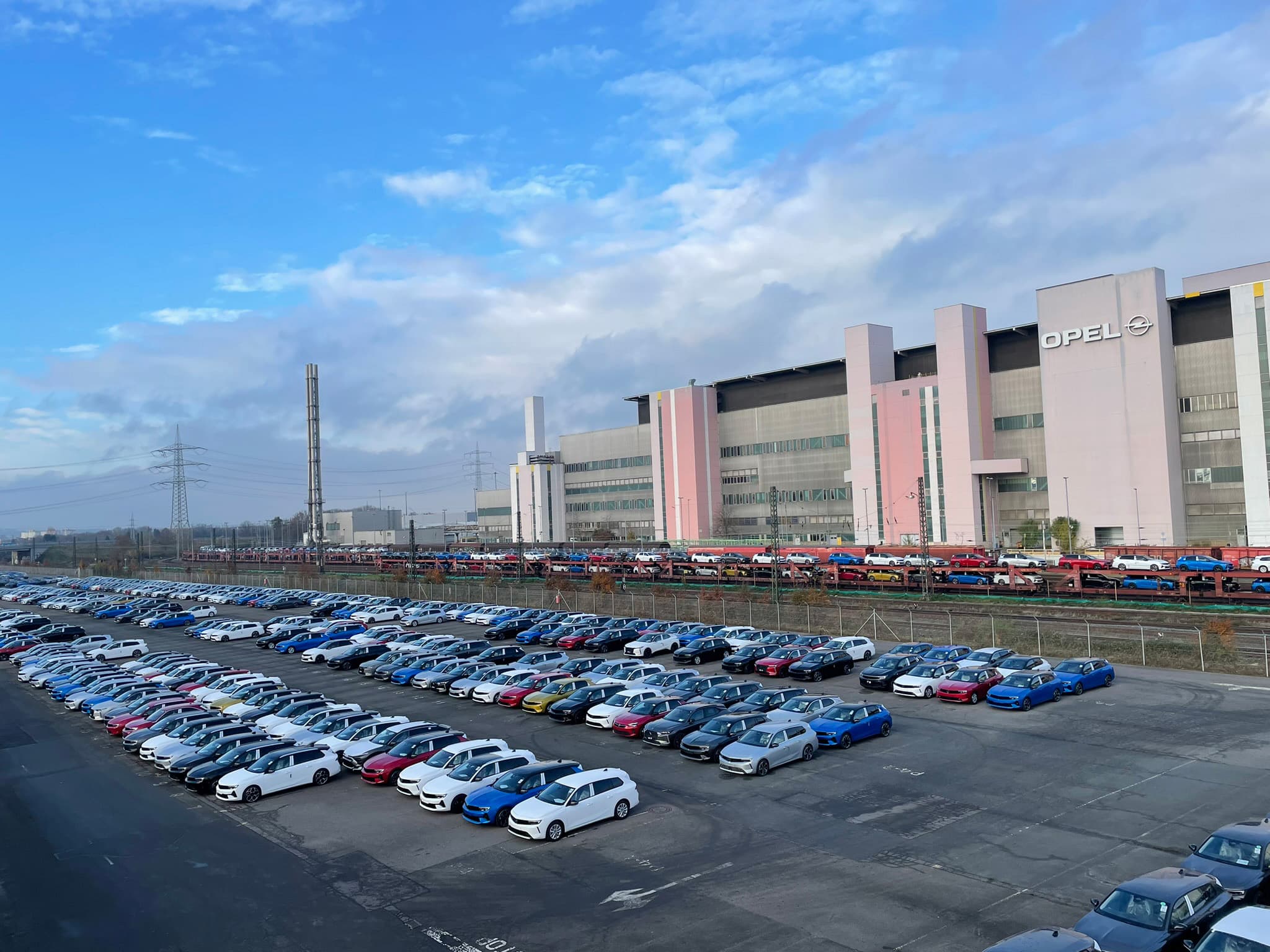
Flexible interim storage of finished vehicles at Stellantis’ in-house compound in Rüsselsheim.
Faster, more predictable, and more sustainable
In addition to stability and capacity, speed also plays a crucial role. On the route between Spain and Germany, transit times have been reduced by around half through targeted optimizations.
But efficiency does not end with transit times and planning reliability – it also directly supports sustainability. By consolidating transport volumes and achieving high capacity utilization, rail becomes a key lever for more environmentally friendly vehicle logistics.
A network with a future
This approach is creating a robust, high-performance network that not only reliably meets current transport demand but is also designed for growth. The clear focus on key corridors will make it possible to bundle increasing vehicle flows in the future and expand the network flexibly. Close collaboration between Stellantis and DB Cargo Automotive forms the foundation for future-proof vehicle logistics in Europe.

 Go
Go