
15. July 2026, 09:54 o'Clock
Article: ABC of freight transport: M for marshalling yard
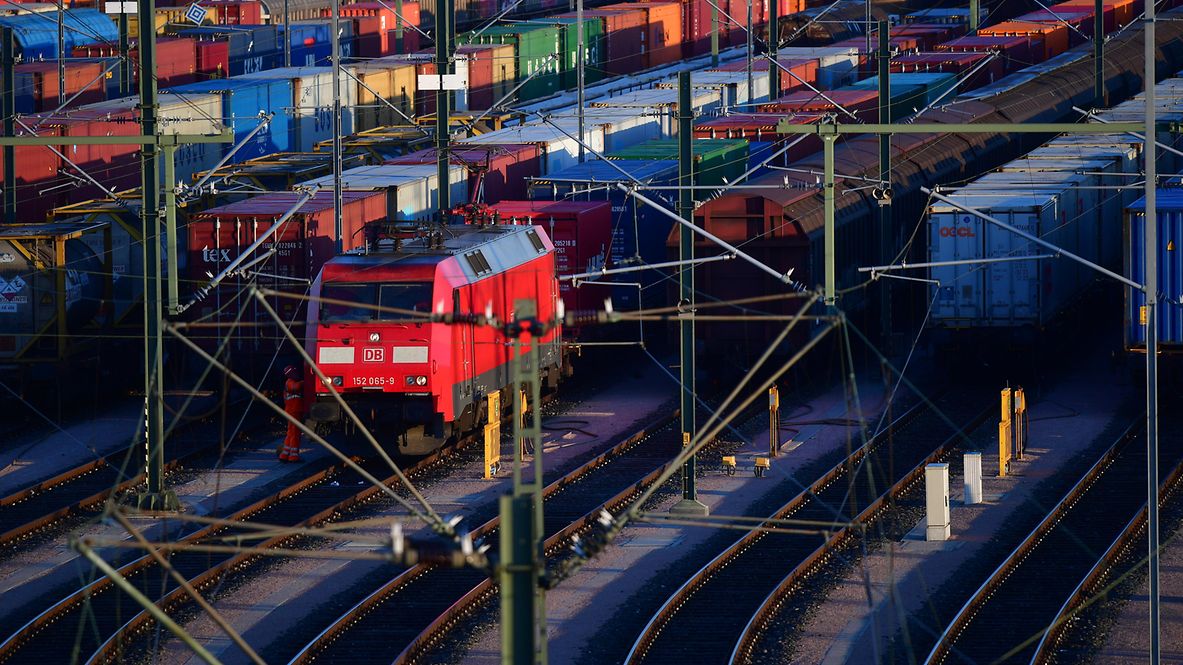
New freight trains are formed every day at the marshalling yard: freight wagons are sorted, inspected and coupled together to form new trains.
A freight wagon rarely reaches its destination on its own. It forms part of a transport chain that runs from the factory via terminals, ports or sidings to the consignee. To ensure these chains function, wagons must be constantly recombined within the network. This is precisely what marshalling yards are for. Here, freight wagons are received, separated, sorted and assembled into new trains.
In the ABC of rail freight transport, ‘m’ therefore stands for ‘marshalling yard’ – a central hub for train formation in single-wagon transport. That is why it is also called a train formation yard. What changing trains at a station is to passengers, the marshalling yard is to freight wagons: this is where the onward journey is decided. A marshalling yard is not a storage area, but a production site for new trains. Shipments are consolidated, supply chains are kept stable, and individual wagons are integrated into a functioning network.
In a nutshell: What is a marshalling yard?
A marshalling yard is a railway facility where freight wagons are re-sorted. Wagons from different trains, customers and routes are separated, organised and assembled into new freight trains. This is particularly important in single-wagon transport.
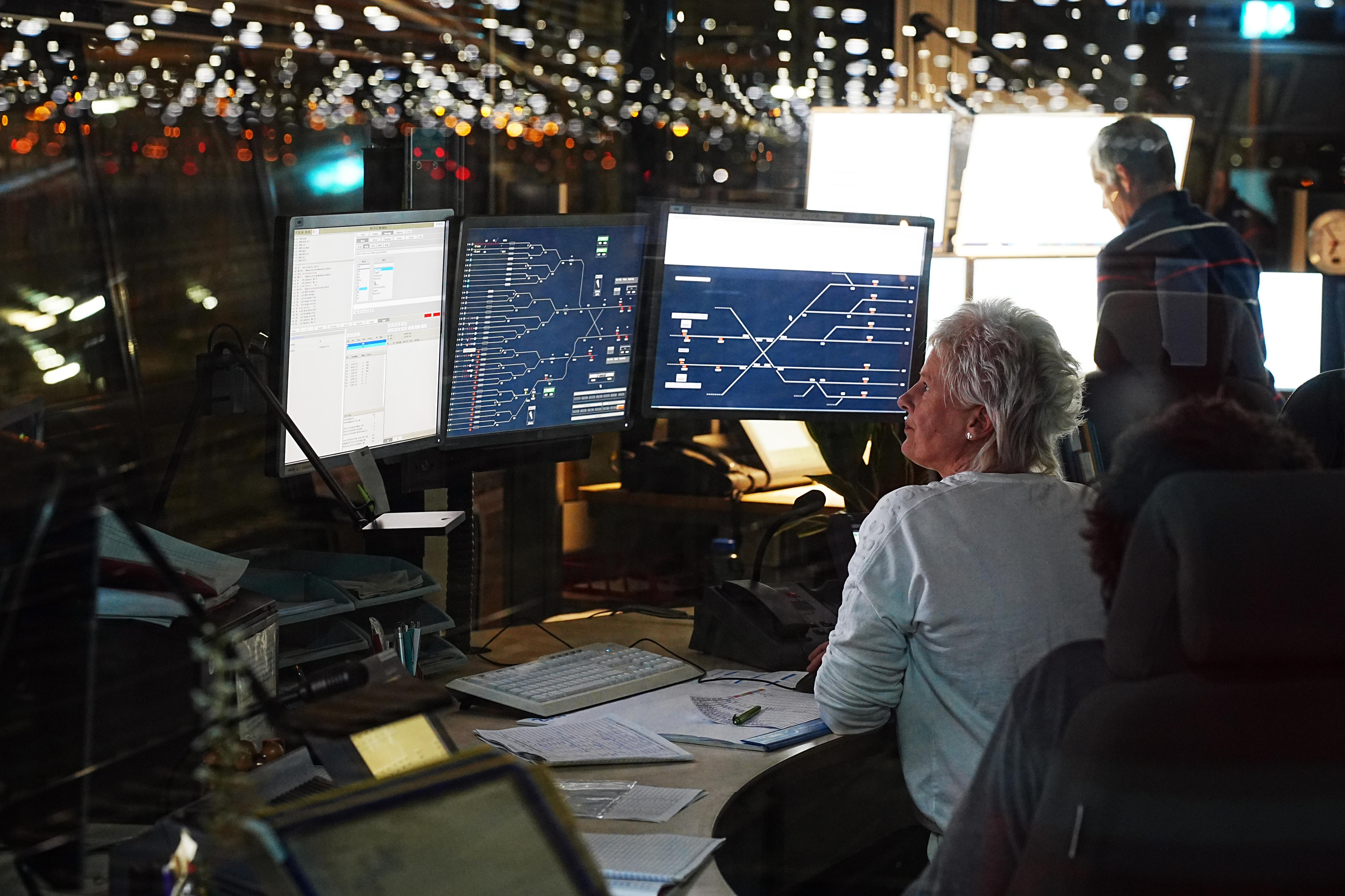
Late shift at the train formation yard in Halle an der Saale.
Why freight wagons need to be sorted
Not every consignment fills an entire train. Many customers dispatch individual wagons or small groups of wagons. These originate from various sources, such as factories, ports or industrial sites, and initially travel separately. In single-wagon traffic, they are bundled within the network and brought together on shared sections of track.
This process does not merely involve creating new trains from individual wagons. Complete trains can also be reformed at the marshalling yard, even though they contain wagons with different origins and destinations. This is particularly common in steel and chemical logistics. An example: a factory sources stainless steel from several producers across Europe. The wagons converge on the single-wagon network, are bundled at the marshalling yard and then run as a complete train on the final leg to the plant.
The marshalling yard thus functions like a distribution centre on the railways – only with freight wagons weighing several tonnes instead of parcels. Not every train requires this intermediate step: direct trains remain as a single unit over longer distances. In single-wagon transport, on the other hand, wagons are flexibly recombined.
How many wagons are turned into a new train
Many processes run in parallel at the marshalling yard: trains arrive, wagons are inspected, and shunting locomotives move individual wagons through the track layout. The operational formation of trains follows a clear logic – based on an existing schedule in the system:
This is how a new freight train is formed
- A train arrives with wagons from different routes.
- Each wagon has already been identified in advance and assigned to its onward route.
- The existing train formation is broken up.
- The wagons are sorted according to their destination.
- New train formations are created on the destination tracks.
- Wagons are coupled, technically inspected and prepared.
The key controlling factor is always the question: Which wagon needs to go where? This determines the choice of track, the order of the wagons and the new train formation. For this to work, every carriage needs a unique identity – in particular via the carriage number, which links all technical and operational information.
The gravity hump: sorting by gravity
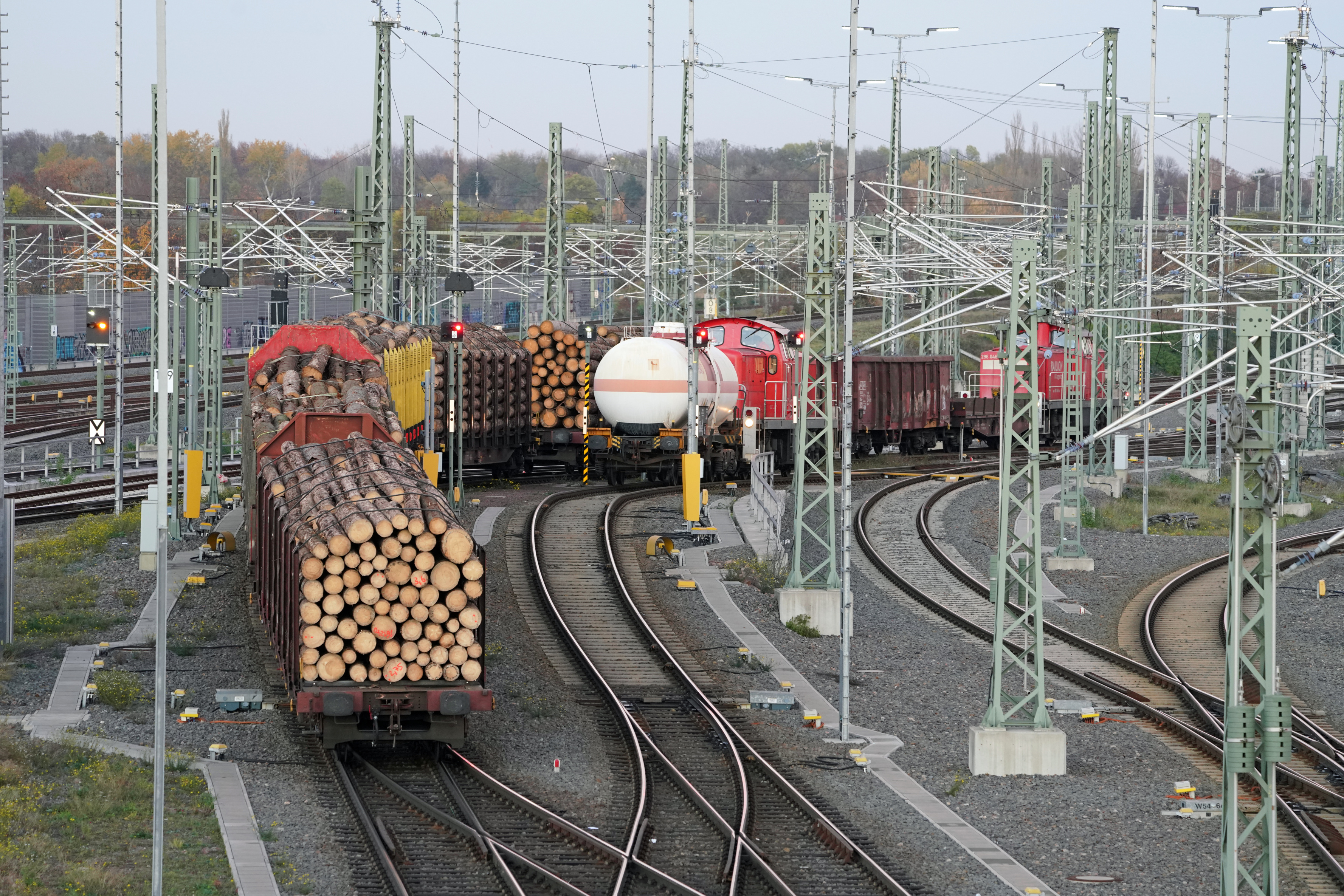
The hump at the Halle an der Saale marshalling yard.
The most recognisable feature of many marshalling yards is the hump. Shunting locomotives push wagons up a small incline, where they are uncoupled and then roll down by gravity into their destination tracks.
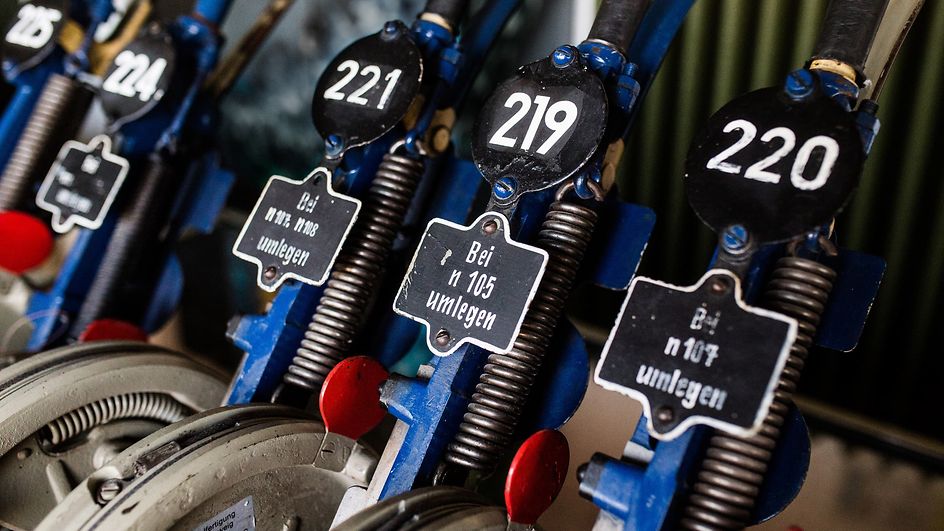
Points, track brakes and stop blocks control the speed and accuracy of the manoeuvre. The hump is the marshalling yard’s central sorting facility.
However, not all wagons are routed over it. In the case of sensitive cargo or special requirements, shunting is carried out directly by the shunting locomotive and staff.
Detail: The stop block
A brake shoe is placed on the track to brake specific wagons or bring them to a halt. It is a simple yet precise tool used in shunting operations.
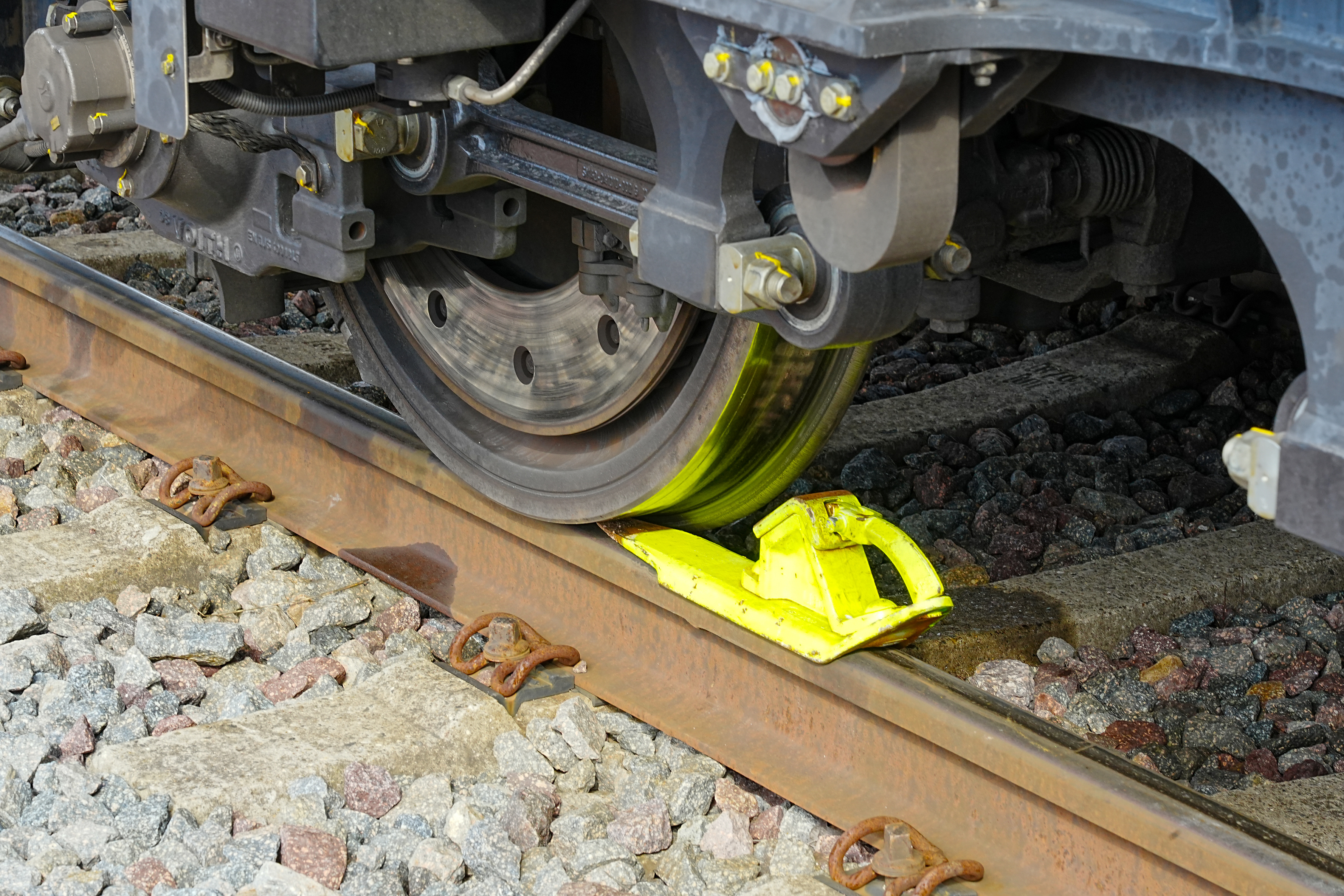
A brake shoe in use.
Marshalling yard in figures
A large DB Cargo marshalling yard handles the following daily:
- 1,500 incoming wagons
- more than 1,000 wagons over the hump
- around 100 trains
Behind every wagon lies a specific transport order within a complex supply chain.
Check first, then move
New train formations are created on the destination tracks. This is not just a matter of the correct order, but also of technical and operational feasibility: weight, braking conditions, load and connecting services must all be taken into account. Only once all the wagons have been correctly coupled do the departure preparations begin: coupling, connecting pipes, carrying out a brake test and checking load securing. Looking ahead, the Digital Automatic Coupling could play an important role here. It is designed to automate the coupling of freight wagons and, particularly in single-wagon transport, help to make train formation and shunting processes faster and more digital.
Preparation for departure
This includes, amongst other things:
- Coupling the wagons
- Connecting the compressed air line
- Technical handling of the wagons
- Checking load securing
- Carrying out the brake test
Only then is the train ready to depart.
People, technology and timing
Marshalling yards are complex operational sites. Points, shunting locomotives, braking systems and digital systems all work in tandem. At the same time, experience, clear communication and precise timing are essential. Modern technology supports operations, but does not replace the skilled staff who manage and ensure the safety of processes. Shunting work takes place predominantly outdoors and requires teamwork, vigilance and strict adherence to safety procedures.
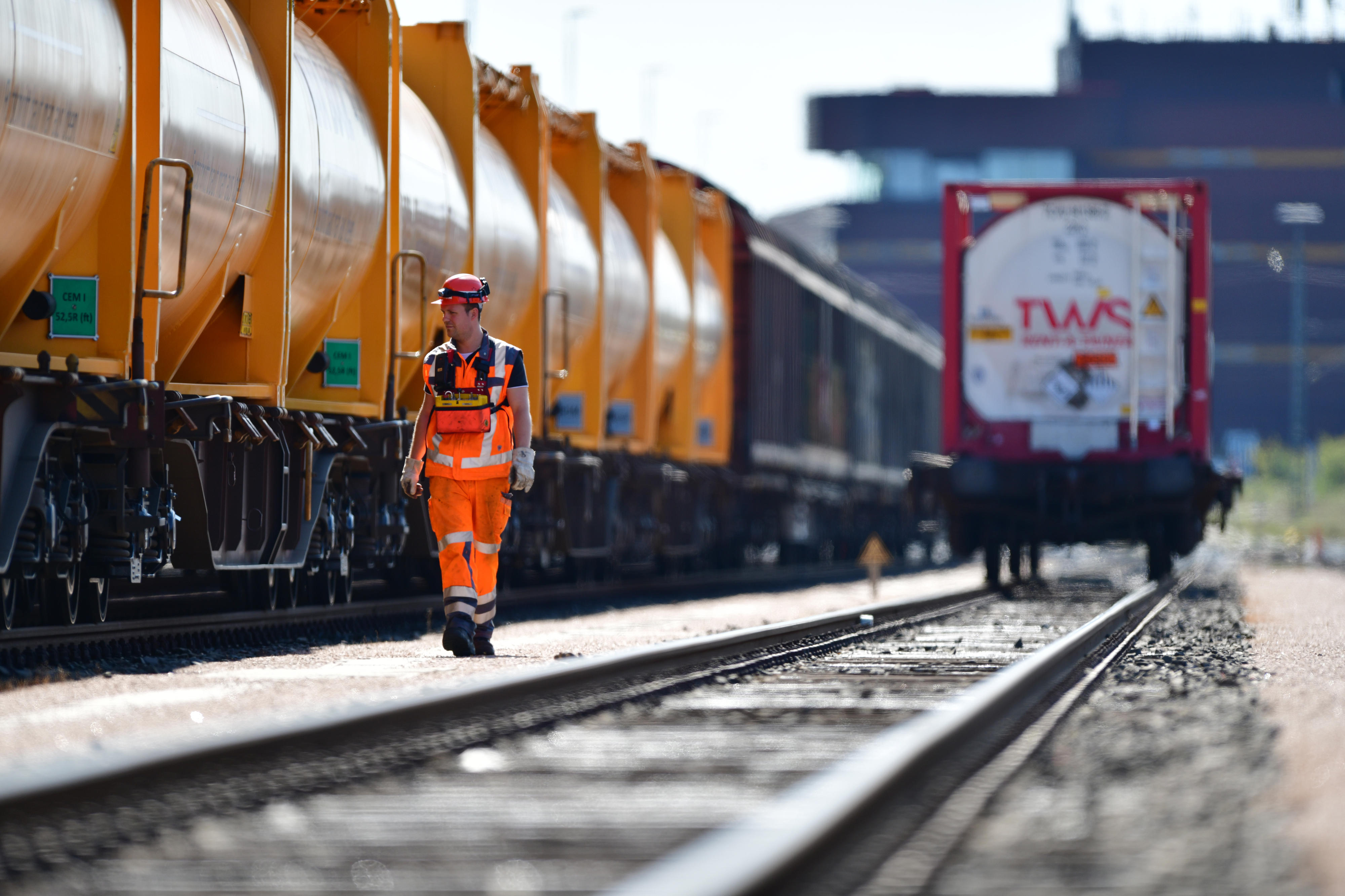
Marshalling yard in Maschen.
Camera systems and digital analysis can help to identify anomalies on freight wagons more quickly and provide data-driven support for technical wagon handling. At the Munich North site, work is underway on automated procedures for damage detection. Marshalling technology is also evolving. Hybrid shunting locomotives can run on battery power and only use diesel when under heavy load. Combined with the use of gravity on the hump, this demonstrates that efficiency in a marshalling yard also means using energy in a way that conserves resources.
Why marshalling yards are important
Marshalling yards make single-wagon transport flexible. Not every consignment requires a block train. Often, individual wagons or smaller units are sufficient. By consolidating shipments, new train services are created that link factories, terminals, ports and industrial centres. This also makes it possible to transport smaller consignments by rail.
Without marshalling yards, single-wagon transport would only be possible to a limited extent. With them, it becomes a networked system. Ultimately, a newly formed freight train leaves the marshalling yard. For the wagons, it is a stopover; for logistics, it is a key production step.
Note: No personal data is collected when submitting feedback. Feedback is processed anonymously. DB Cargo Privacy Notice
 Go
Go