
23. April 2026, 09:50 o'Clock
Article: ABC of freight transport: Interlockings Part 1 - centralised control and safe routes in the rail network
Interlockings control points, signals and routes and reliably secure railway operations.
Signal boxes - the heart of railway operations
Signal boxes are the central control centres at railway stations or sections of track. Their task is to control points and signals, define routes and ensure that trains run without conflict.
Before a route is released, the signal box - or the operators with technical support, depending on the type of signal box - automatically or semi-automatically checks whether all requirements have been met: Are the points set correctly? Are all track sections clear? Are level crossings secured? Only when these conditions have been met is the route closed and the associated main signal set to 'go'.
This interaction is monitored by a safety logic system. In the event of a fault, signals fall into a safe state (stop/no movement) and routes and points are locked in such a way that no danger arises. Defined procedures such as blocking or emergency operation ensure that operation can continue in a controlled manner even in the event of faults.
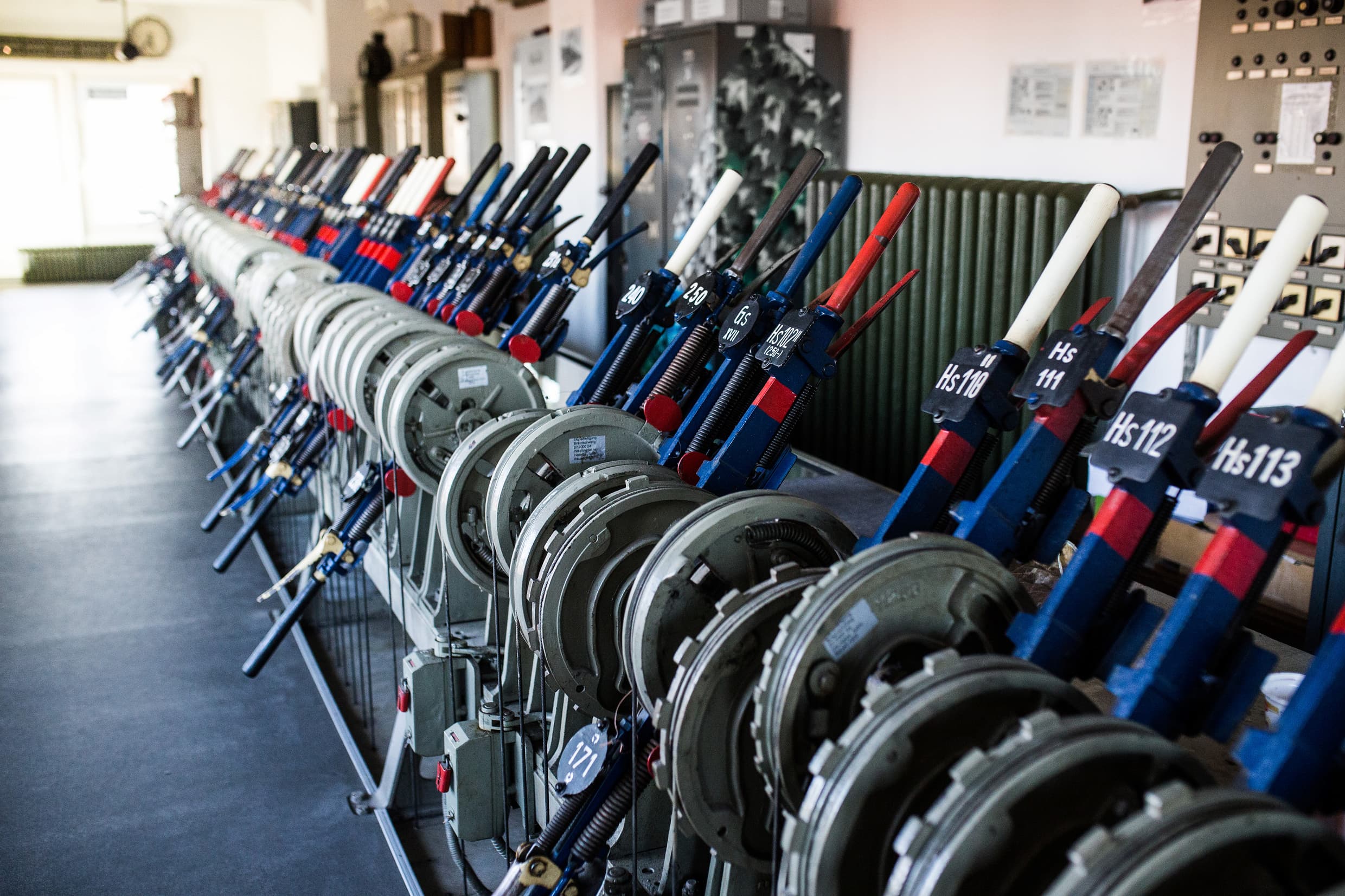
Mechanical signal box in the Kassel marshalling yard: Signal lever row for manual signal box operation - safe routes thanks to mechanical interlocks in the lever mechanism.
How signal boxes ensure safety
The technology behind a signal box ensures that trains are always travelling on safe routes. Important elements are:
- Route definition: Points and signals are connected to form a protected route.
- Flank protection: Catch points and blocked secondary tracks prevent collisions.
- Track vacancy detection: Depending on the type of interlocking, this takes place automatically via axle counters or track circuits or by local control.
This ensures safe, conflict-free and reliable operation - even with several trains running at the same time.
The technical development of signal boxes
Signal boxes are available in various designs that have developed over decades and differ primarily in their degree of automation, control area and operation:
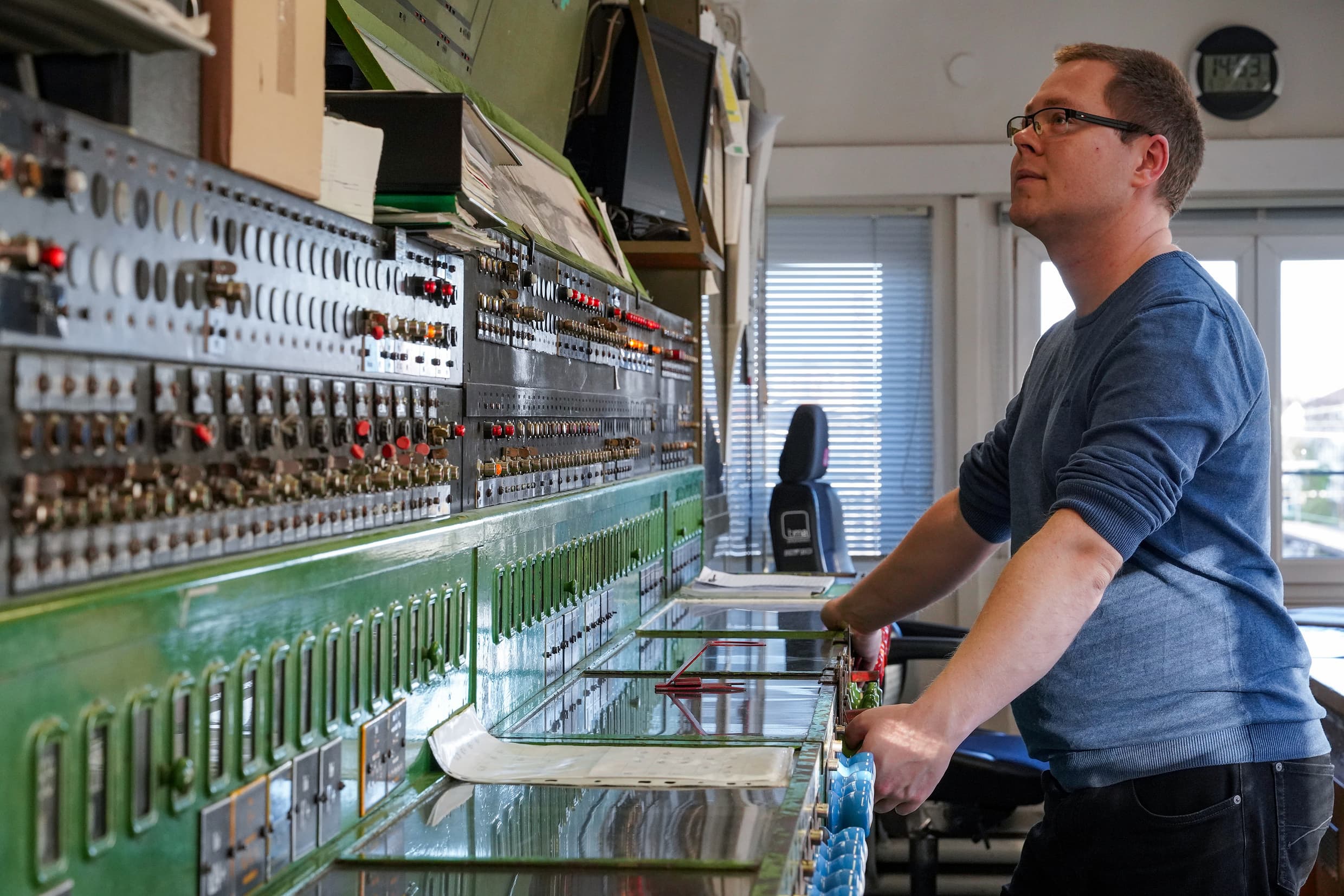
Electromechanical signal box in Rüsselsheim: Mechanic operation with electric drives and lamp panel - safe routes thanks to electrical dependencies.
- Mechanic interlockings: lever mechanisms and wire pulls control points and signals directly, often with visual inspection of the tracks. Small control areas, high manual effort.
- Electromechanical signal boxes: Mechanic operation combined with electric drives and lamp panels. Initial electrical dependencies increase safety and ease of operation.
- Relay interlocking: Electrical wiring takes over the safety logic. Track vacancy detection, route formation and exclusion logic run automatically. Operation via schematic route setting panels.
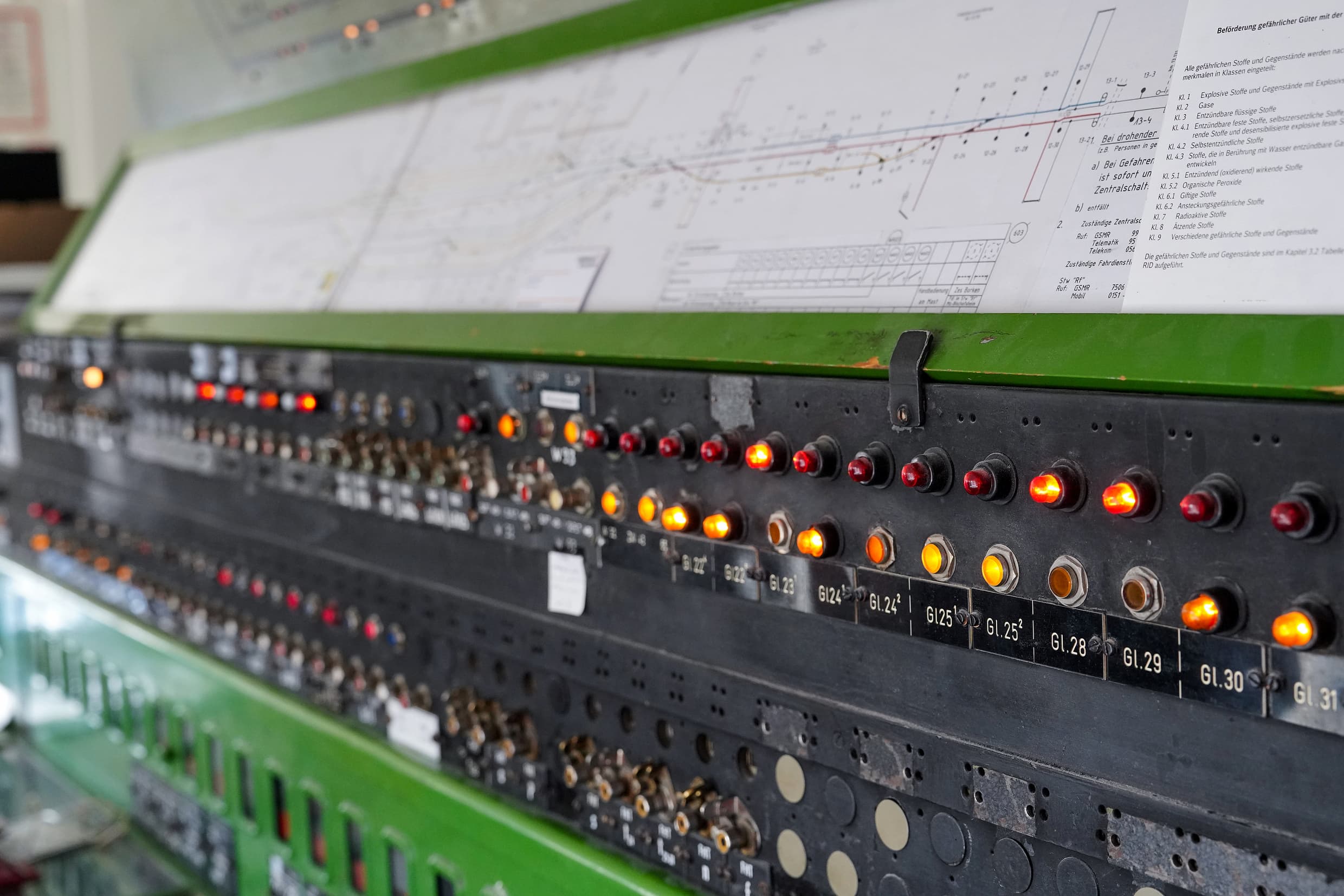
Electromechanical signal box in Rüsselsheim (detail): Lamp panel with track diagram and signalling lamps - status of points and signals in view, routes secured by electrical dependencies.
- Electronic interlocking units (ESTW): Safety computers take over the relay logic, several operator stations enable centralised control, status data facilitate diagnostics.
- Digital interlocking systems (DSTW): IP-based, distributed architecture with digital object controllers. Signal commands via secure networks, easily expandable, basis for automation and standardised digital interfaces (interoperability with ETCS in particular).
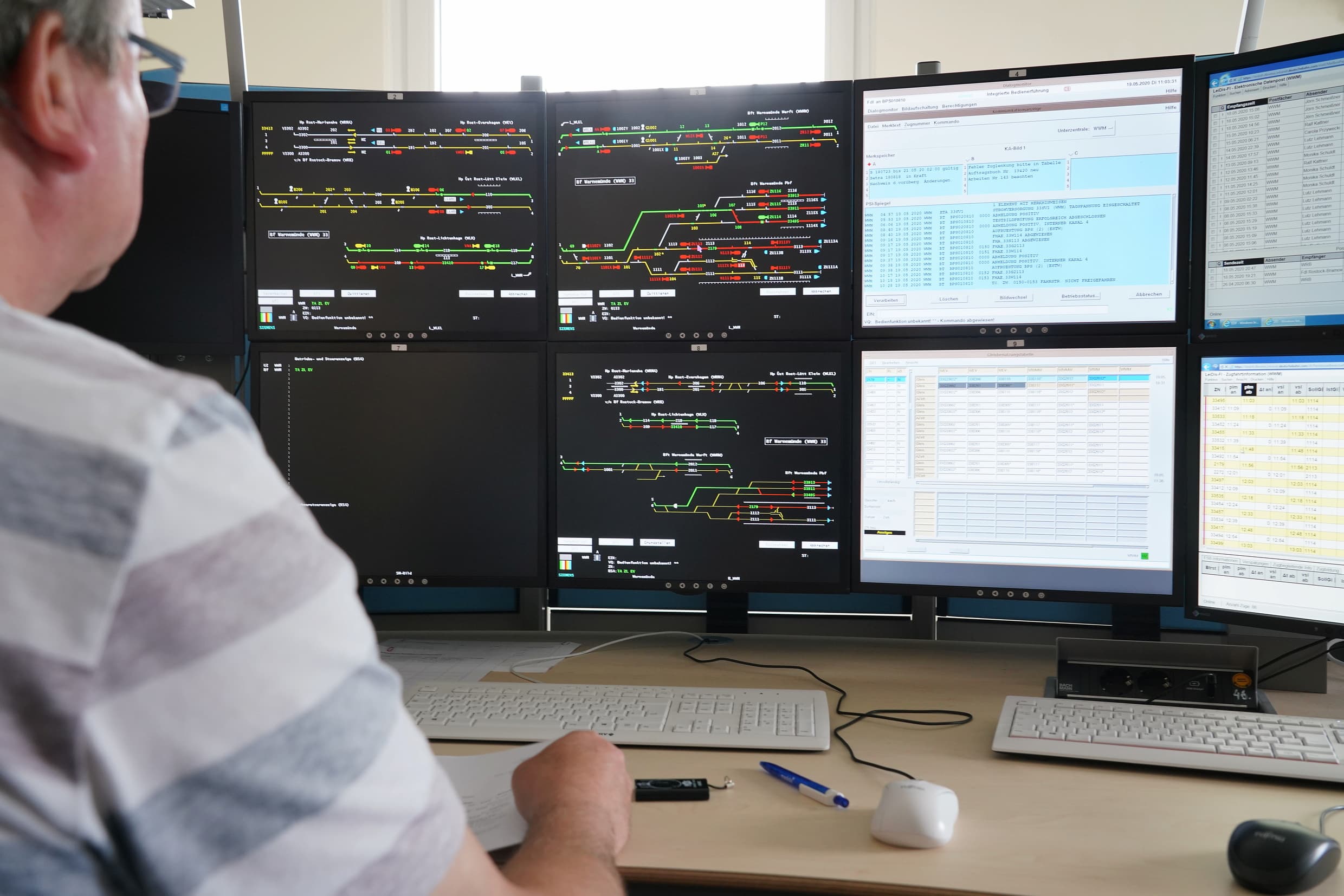
Digital interlocking (DSTW) in Warnemünde: IP-based control and safety technology controls points, signals and level crossings centrally and safely.
All interlocking generations fulfil high safety requirements. The modernisation primarily increases automation, ease of use, diagnostic capability, remote monitoring/remote operability and supports capacity increases - especially in conjunction with ETCS and digital control and safety technology, while the safety level remains at a standard-compliant level.
Note: No personal data is collected when submitting feedback. Feedback is processed anonymously. DB Cargo Privacy Notice
 Go
Go