
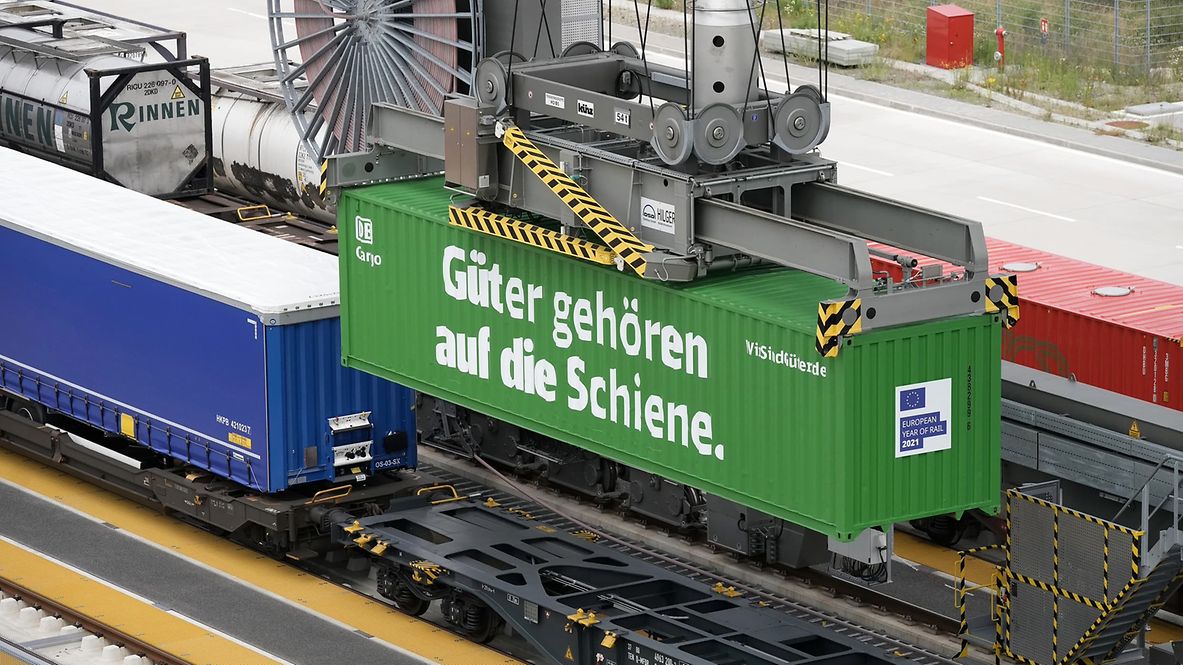
27. August 2026, 12:31 o'Clock
Article: Rail freight transport without a private railway siding: How businesses can access the rail network
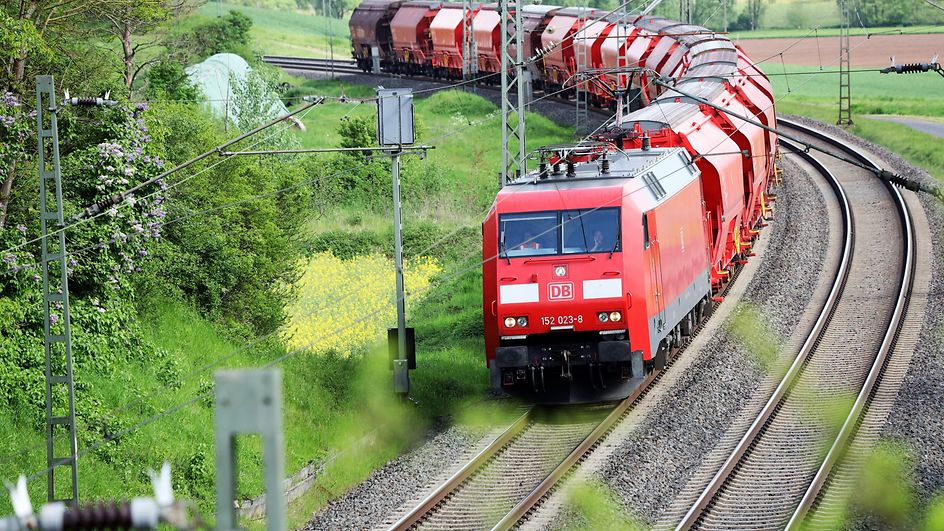
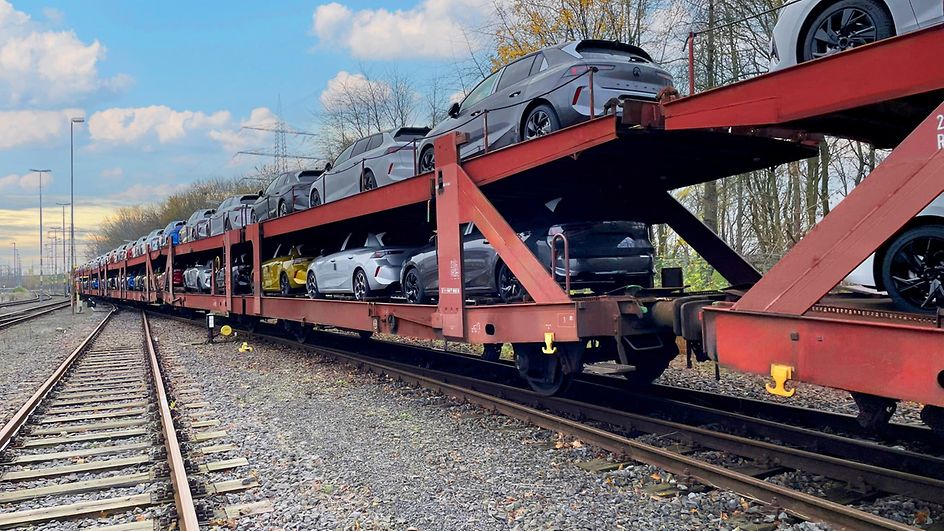
Terminals and railports link road and rail, making rail freight transport accessible even without a dedicated sidings.
Many companies assume that rail freight transport is only possible if they have their own private railway siding. In fact, sites without a private railway siding can also use the rail network. Terminals, railports and combined transport chains create the conditions for connecting existing supply chains to the rail network.
The decisive factor is therefore not simply whether there is a track directly at the factory gate. Rather, it depends on how the existing supply chain can be sensibly integrated with the rail network. This requires a suitable interface where goods or loading units can be transferred from road to rail. Depending on the goods being transported, the location and the route, the transfer can take place using a wagon, a container or another suitable loading unit.
Railports and terminals provide companies without their own railway siding with access to the rail network. This allows the advantages of both modes of transport to be combined: flexible collection and delivery by truck, and the efficient transport of larger volumes by rail.
The basic idea: combining road and rail effectively
In combined transport, the strengths of both modes of transport are combined. Trucks handle the flexible first and last mile, whilst rail handles the longer main leg of the journey. This means that even companies without their own sidings can use rail freight transport.
The typical process is as follows:
- The goods or loading unit are transported by truck from the company’s premises to the nearest suitable interchange.
- There, the goods are transferred to the train.
- The freight train handles the main leg over the longer distance.
- At the destination, the load unit is transferred back onto the truck.
- The truck then delivers the goods to the recipient.
There is no need to repeat this basic principle several times in the following discussion. The key point is that the transport chain functions effectively only when the pre-haul, transhipment, main leg and post-haul are reliably coordinated with one another.
How does a terminal work?
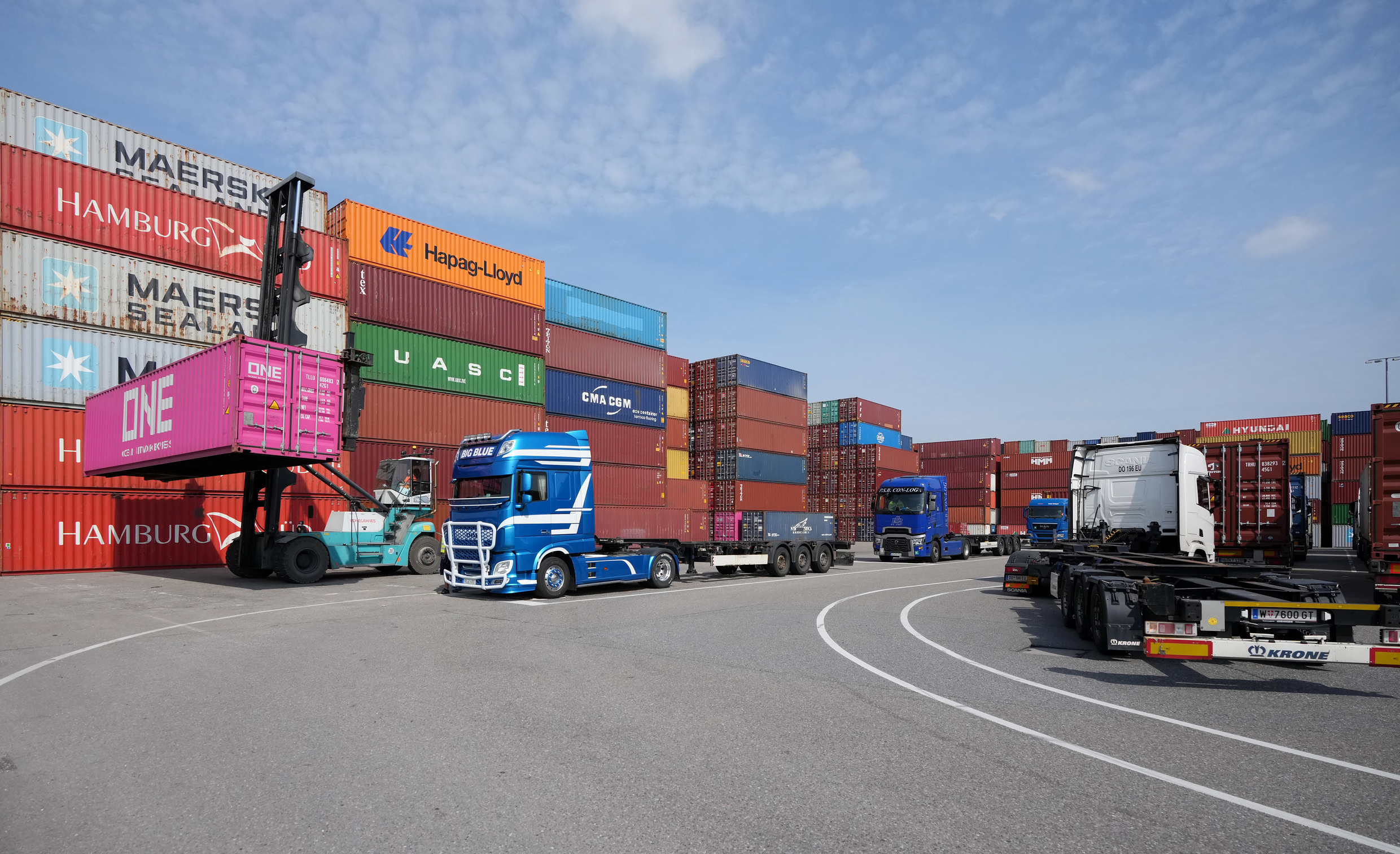
The Munich Terminal illustrates how terminals and railports act as key links between road and rail, making rail freight transport accessible to customers.
A terminal is a transhipment point where load units are transferred between road and rail. Typical load units include containers, swap bodies or craneable semi-trailers.
The process at the terminal is standardised. The truck brings the loading unit to the terminal. There, it is accepted, registered and prepared for transhipment. It is then loaded onto a freight wagon using suitable handling equipment, such as a crane or reach stacker.
At the destination terminal, the process takes place in reverse order. The load unit is unloaded from the train, stored temporarily or made available directly for collection. The truck then takes over for onward transport to the consignee.
This means that a terminal is more than just a place for transhipment. It coordinates time slots, provides loading units, consolidates traffic and ensures that road and rail operations are seamlessly integrated.
What role do railports play?
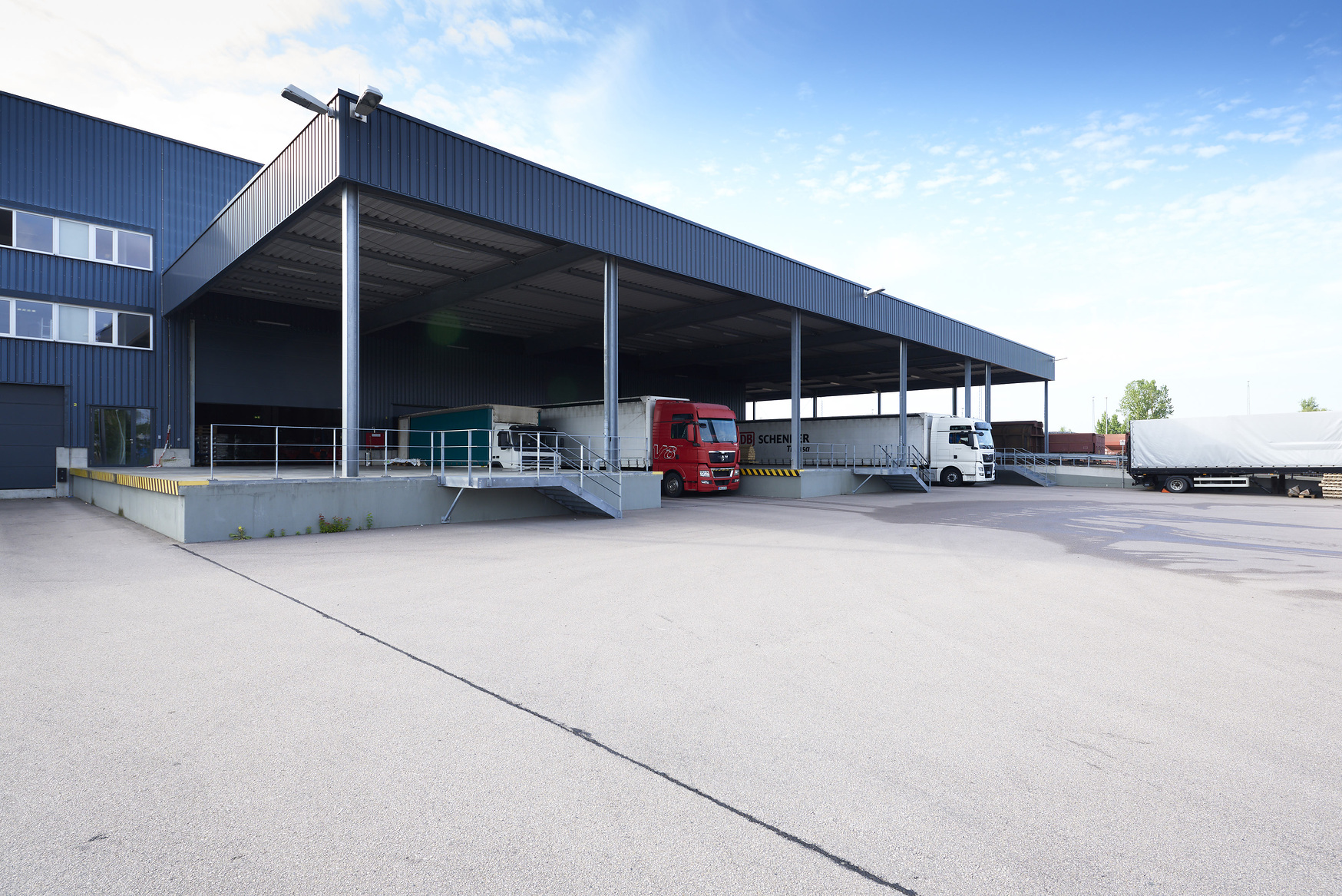
The Nuremberg Railport exemplifies how companies without a direct rail connection can access rail freight services through the seamless integration of road and rail transport.
Railports are also access points to the rail network, but often go beyond mere transhipment. They are aimed particularly at companies that do not have their own railway siding and require additional logistics services.
In addition to the transfer between road and rail, railports can offer further services depending on their location, such as temporary storage, depot services, loading and unloading, or customs clearance. This creates regional logistics hubs through which goods can be consolidated and prepared for rail transport.
Whilst terminals primarily organise the standardised handling of load units, railports often offer broader logistical access to the rail network.
Terminal or railport: what is the difference?
| Aspect | Terminal | Railport |
|---|---|---|
| Main function | Transhipment of load units between trucks and trains | Access to rail with additional logistics services |
| Typical use | Combined transport using containers, swap bodies or semi-trailers | Consolidation and organisation of shipments for companies without a railway siding |
| Operational focus | Receipt, registration, handling, temporary storage and delivery | Handling plus services such as storage, depot services, loading and unloading, or customs clearance |
| Role in the transport chain | Connects road and rail at a defined transhipment point | Facilitates practical access to the rail network for businesses |
Both solutions thus fulfil a similar basic function: they provide access to the rail network. The difference lies primarily in the scope of services. Terminals focus on transhipment, whilst railports can take on additional logistical tasks.
Why can rail access be worthwhile?
Rail freight transport offers economic and environmental benefits, particularly for longer distances and predictable shipments. By consolidating large volumes of goods, freight trains can relieve pressure on the roads and reduce CO₂e emissions by around 80 per cent compared with transport by truck alone. A single freight train can replace up to 52 trucks.
For these benefits to be realised, the entire transport chain must be well-coordinated. This includes suitable volumes, reliable time slots, appropriate loading units and an accessible rail interface.
Conclusion
The absence of a dedicated rail siding does not mean that rail freight transport is out of the question. Companies can gain access to the rail network via terminals, railports and combined transport chains.
Terminals enable standardised transhipment between road and rail. Railports also often offer additional logistics services, thereby facilitating the transition to rail freight transport. The key factor is which solution best meets the company’s requirements and can be meaningfully integrated into existing supply chains.
This makes rail transport accessible even to companies whose sites are not located directly next to the track.
Note: No personal data is collected when submitting feedback. Feedback is processed anonymously. DB Cargo Privacy Notice
 Go
Go