04. March 2026, 13:51 o'Clock
Article: Tear-resistant starts on the rail
Flexible EV concept for a nylon pre-material
The chemicals market is tense, production volumes fluctuate and supply chains have to react flexibly. This is precisely where the new logistics concept from DB go BTT, part of DB go's Liquids & Bulk business segment, comes in for chemical customer Fibrant B.V.
Fibrant produces the raw material cyclohexanone in Geleen, the Netherlands - a key component in the production of polyamide 6, better known as nylon. In order to meet changing market requirements, the supply chain had to be strategically rethought: Customers want delivery by ship. The raw material must therefore be transported reliably to the seaport.
From the plant to the tank farm at Europe's largest port
The solution: DB go BTT transports the raw material by rail from the plant in Geleen to the LBC Tank Terminal in Rotterdam-Botlek - directly at Europe's largest seaport. There, the cyclohexanone is pumped into tankers rented by Fibrant and stored temporarily until further shipment. This creates a seamless link between the production site, the tank farm and the global sales markets.
The terminal in Rotterdam-Botlek has been extensively modernized and expanded in recent years. The centerpiece is a state-of-the-art loading and unloading facility that is specially designed to meet the requirements of sensitive chemical products. Efficient processes, high safety standards and an optimally coordinated infrastructure ensure that even large quantities can be handled reliably and with quality assurance.
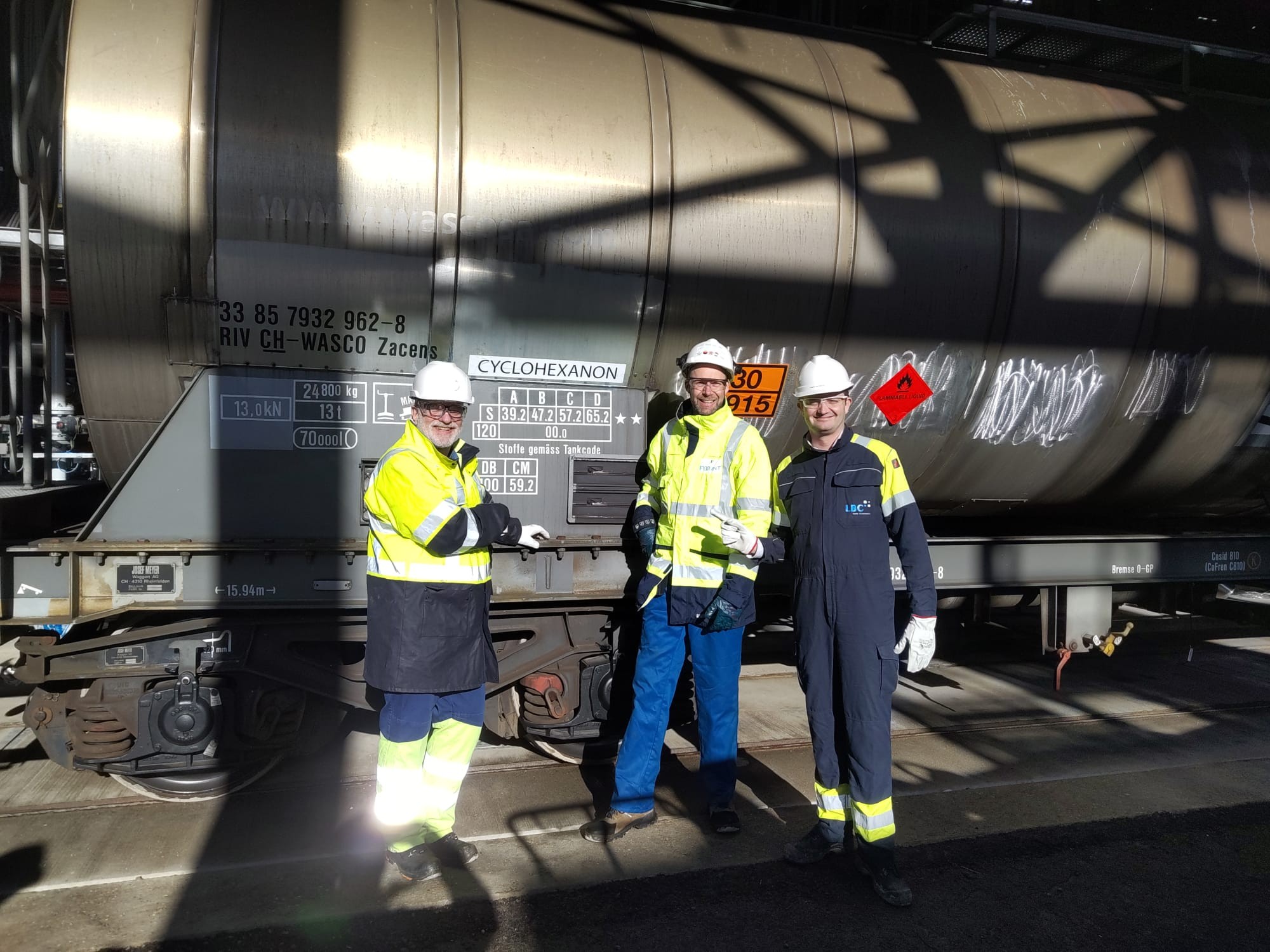
Successful first delivery of cyclohexanone at the terminal
The transport concept was initiated and brought together by Erik Koning, Business Development Manager at DB go BTT. Together with the customer and the terminal, his team developed a viable overall concept along the entire supply chain. "Especially in a volatile market environment, solutions developed in partnership are the key to keeping supply chains stable and predictable," emphasizes Koning. "Our aim is to network industry and seaports in such a way that real flexibility is created for our customers." The collaboration is also viewed positively by customers: "Security of supply is our top priority. The close integration with DB go BTT and the terminal gives us the stability we need to be able to produce and deliver reliably even in a dynamic market," explains Bertin Terpstra, Supply Chain Manager at Fibrant B.V.
Single wagon concept as a success factor
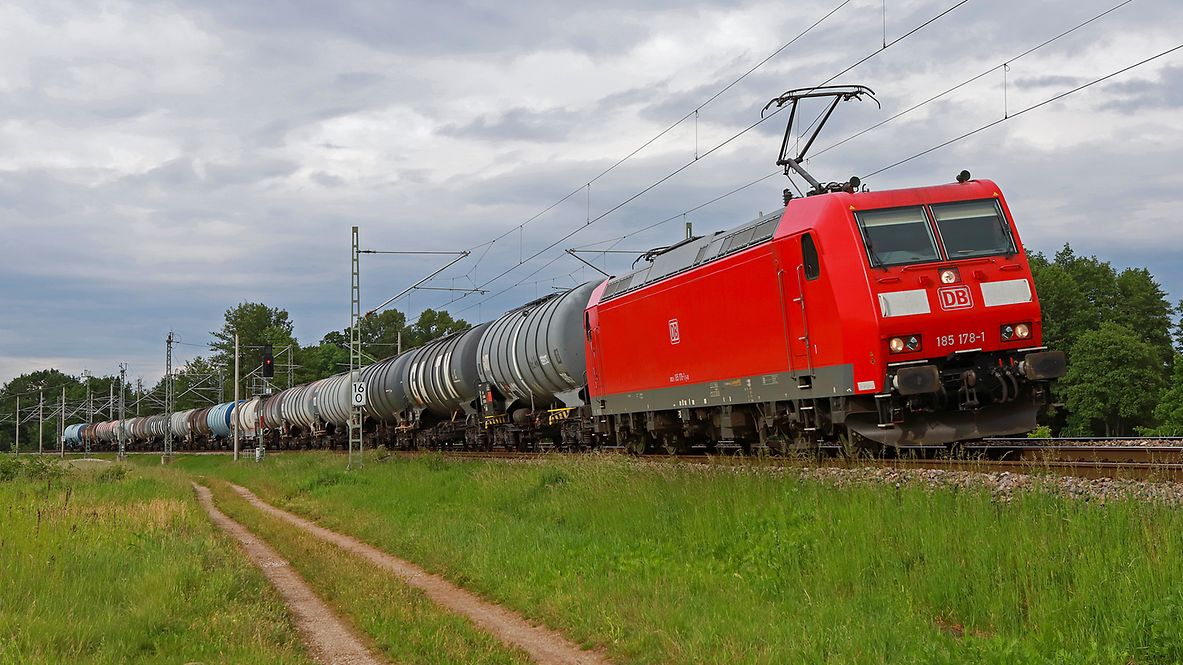
The transports are caried out in single freight wagon transport (EV). Several wagon groups with up to twelve tanks per week connect Geleen with Rotterdam. What at first glance sounds like a classic block train business was deliberately conceived differently: DB go BTT deliberately opted for a high-frequency and flexible EV concept. The background is clear: production and sales volumes in the chemical industry currently fluctuate greatly. With the single freight solution, these volatilities can be cushioned much better. Deliveries can be controlled in line with demand and terminal capacities can be utilized more evenly. The flexible EV network is a strategic advantage for the chemical industry in particular: it connects production sites, tank farms and seaports closely and reliably - and offers precisely the adaptability that chemical supply chains need in a dynamic market environment.
Digitalization creates transparency in real time
A key success factor of the transport concept is the consistent digitalization of the interfaces. "Our goal was to create an end-to-end digital connection between the plant, transport and terminal," explains Ernie Dullaard from DB go Nederland, who was responsible for the technical integration. "Real transparency along the entire supply chain can only be achieved if everyone involved can access the same information in real time." LBC Tank Terminal and DB go BTT developed an electronic retrieval process in advance. This allows the terminal to digitally view the quantities already stored on site and which deliveries are pending at any time. In addition, LBC receives real-time data on numbers, departure locations and capacities. Thanks to the connection to link2rail, it is also possible to transparently track where the wagons are currently located in the network. Above all, the data integration offers the terminal more operational control options. "The early availability of transport data allows us to plan our tank occupancy and unloading processes precisely. This increases process reliability and ensures stable processes in daily operations," emphasizes Alexander Dorhout Mees, Product Manager at LBC Tank Terminal.
A successful start - with prospects
The first wagons were unloaded safely and on schedule at the beginning of February. The successful start confirms the viability of the concept and forms the basis for sustainable further development of the cooperation.
The concept shows how DB go acts as a link between industry and seaports: safe in the handling of sensitive chemical products, flexible in operational implementation and a partner in the development of resilient solutions. In this way, intelligent rail logistics not only create tear-resistant nylon fibers from a chemical precursor - but also a stable, viable supply chain for the future.
 Go
Go