
17. December 2025, 08:43 o'Clock
Article: The ABCs of freight transport – F for flank protection
Flank protection reliably keeps routes clear and supports stable, efficient cargo transport.
Flank protection: invisible protection for every route
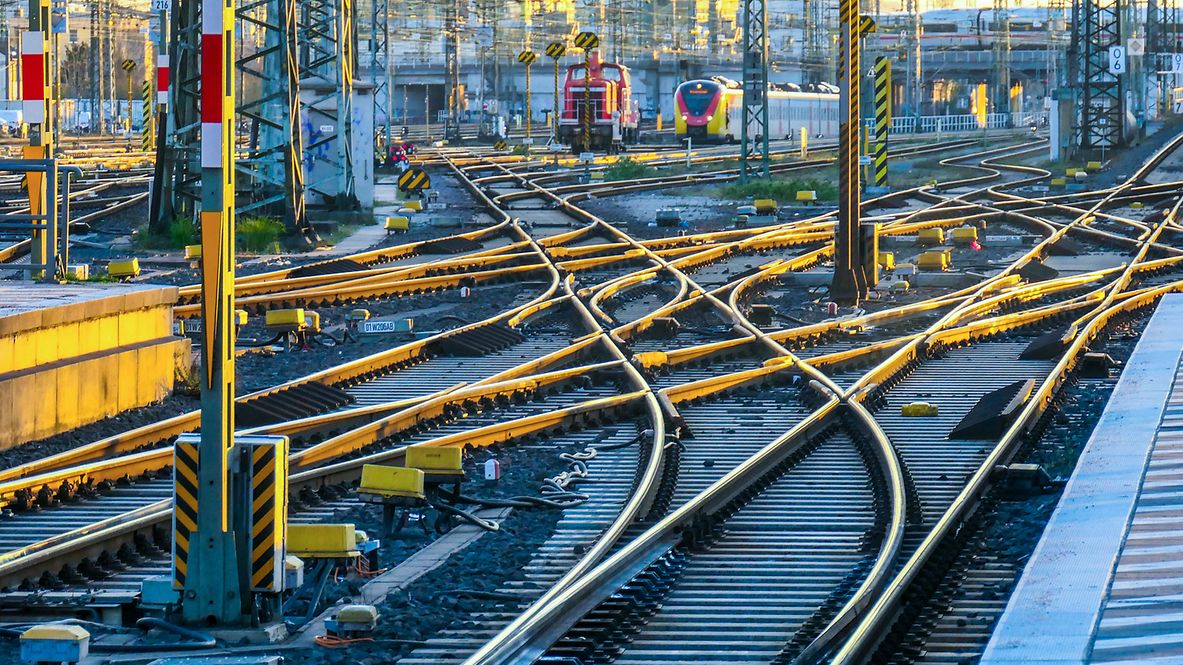
How can routes be reliably kept clear, even when shunting is taking place on all secondary tracks at the same time? The answer is flank protection. Flank protection is a fixed safety function in the signal box. It automatically ensures that routes are secured at the sides – regardless of what is happening on adjacent tracks. This is the automatic safety device for routes and adjacent tracks that prevents trains or vehicles from entering a cleared route from the side. For operations, this means more stable processes, greater safety, more predictable routes and less stress for staff, even in busy marshalling yards or junctions where delays and shunting movements can disrupt operations. Flank protection is particularly important for freight trains: they are long, heavy and firmly integrated into transport chains. Any delay can have a direct impact on loading and transfer processes. Flank protection helps to keep routes reliably clear and enables parallel routes, making rail traffic flow more smoothly and transport more predictable, while staff can concentrate on other tasks.
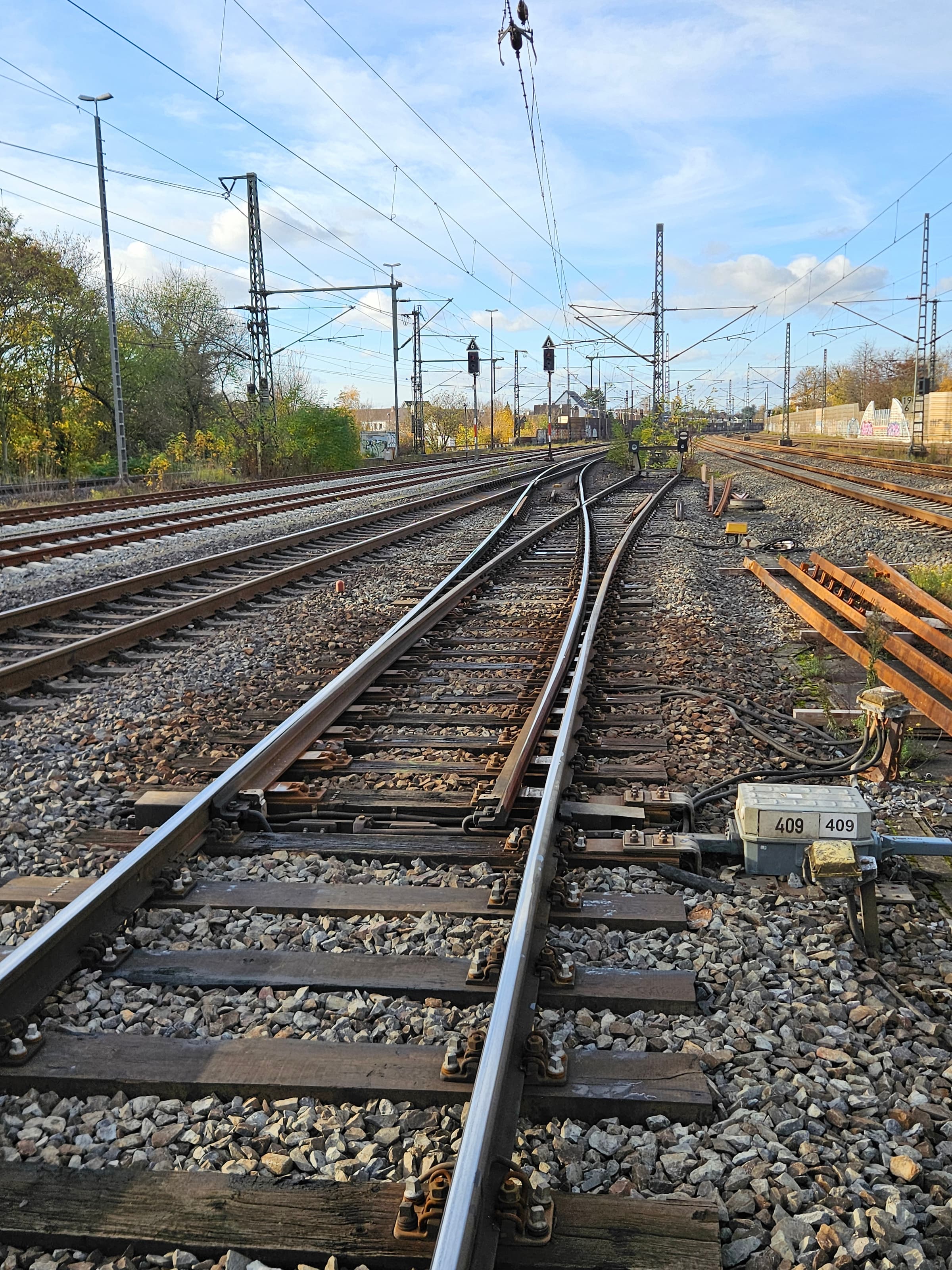
Catch points with track closure: As the points lead to the right into the protective track, the left-hand main track remains reliably free. This means that trains can pass through there while trains run in parallel on the flank-protected track.
Benefits for operations
Flank protection stabilises and speeds up train services while ensuring a high level of safety. Train dispatchers and planners can rely on predictable processes, trains run efficiently and tracks are used optimally. For freight, this means reliable transport chains, fewer delays and efficient use of infrastructure, even when operations are complex or busy.While the signal box automatically checks everything, staff can concentrate on other tasks – an invisible safety net that stabilises processes.
Technical implementation
Flank protection is fully integrated into signal box and signalling technology. As soon as a route is set up, the signal box automatically checks that all flanking safety devices are set correctly. This is where interlocking logic comes into play: it is the "brain" of the signal box, taking into account all dependencies between points, signals, catch points and track closures. Only when all conditions are met – points are set to reject, catch points divert possible incorrect movements to the protective track, track closures are active, German Sh protection signals show "stop" – is the main signal set to proceed.
Thanks to the interlocking logic, no conflicting routes can be authorised. The system ensures that processes remain predictable, even with parallel shunting or line movements, and that freight trains can be moved safely and efficiently.
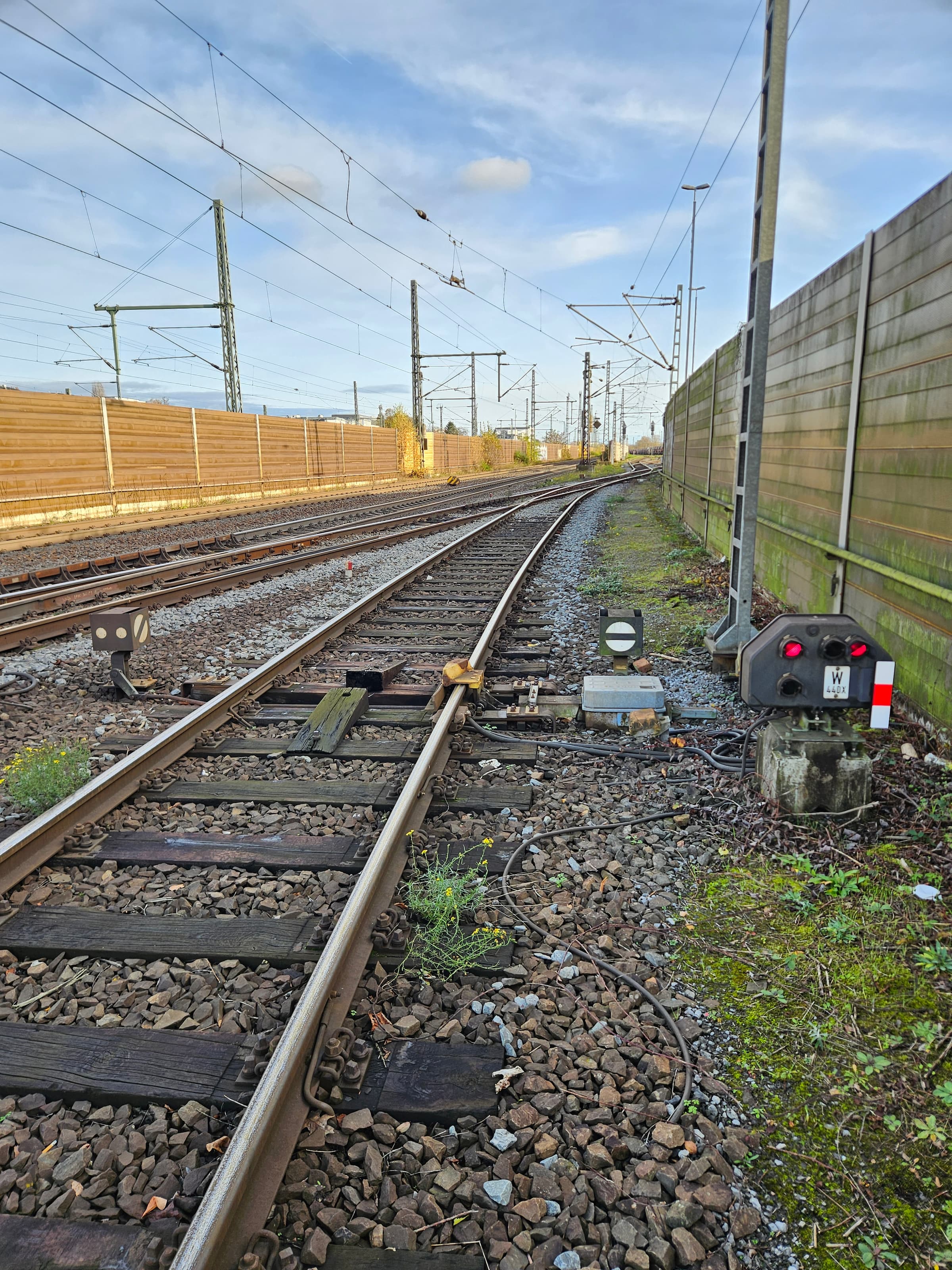
Classic track closure for lateral protection: It protects incoming trains from the left while shunting can continue on the track. If a shunting movement overruns the stop signal, the track closure ensures a controlled derailment and thus protects the train journey.
Areas of application
Flank protection is particularly relevant in marshalling yards, busy junctions and at interfaces between mainline and industrial railways. It prevents routes from being blocked, keeps main tracks clear and ensures stable operation. For freight transport, this means predictable processes, safe transport and maximum track utilisation, even under complex operating conditions.
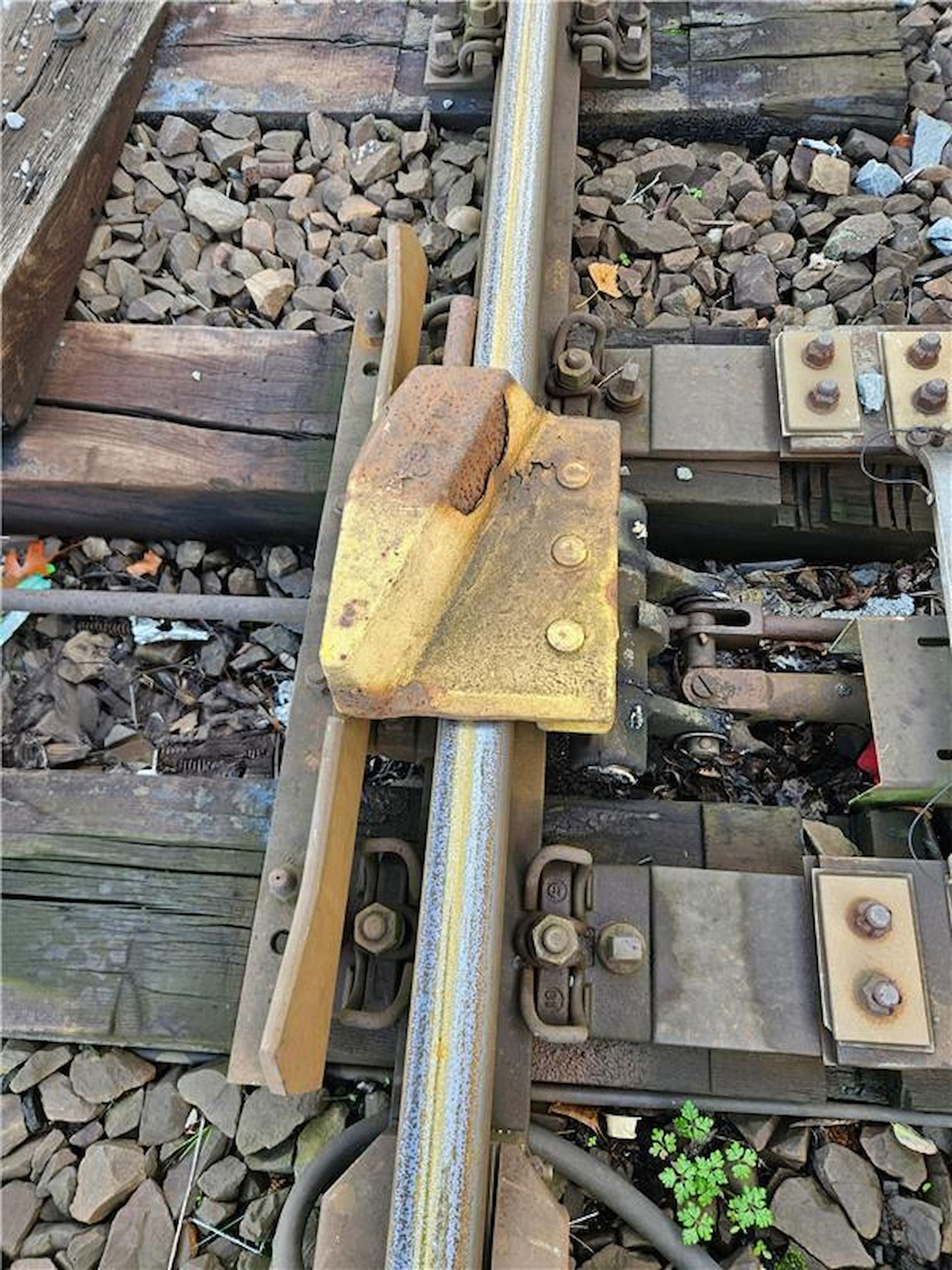
Detailed view of a derailer: If it is run over, it deflects the wheel to the right in a targeted manner, preventing vehicles from travelling sideways onto the left-hand track.
Looking to the future
Modern signal boxes – whether relay, electronic or digital – implement flank protection across entire junctions automatically. Interlocking systems check all dependencies in milliseconds, while digital control and operating systems clearly visualise statuses. The result: safe, efficient and stable operation that reliably supports cargo transport in particular and increases the performance of the line.
Micro glossary
Side-on collision: Side entry into a secured route.Route: Fixed train path through points and signals.Catch points: Diverts unintended movements from the route to the protective track.Track barrier: Mechanical barrier for stopping vehicles in the shunting area.Protective/cover signal: Signal that secures adjacent tracks.Interlocking logic: Automatic system in the signal box that only releases routes when all dependencies are safely met.
We would like to thank Tim Janotta, train driver at DB Cargo, for his technical advice and support.


 Go
Go