
12. March 2026, 10:00 o'Clock
Article: The ABCs of freight transport – S for Sifa
Why a small warning signal in the driver's cab makes a big contribution to operational safety – both nationally and internationally.
Anyone who drives or dispatches trains on a daily basis knows that safety does not only arise in the event of a malfunction. It arises from stable operation and the reliable interaction between people and technology. This is exactly where Sifa comes in. It works unspectacularly but consistently – and that is precisely where its strength lies. A brief impulse, a confirmed moment of attention, and operations continue as planned.
The safety driving circuit is therefore not purely an emergency system, but a permanently active companion in the driver's cab. It belongs to the group of so-called vigilance systems – systems that monitor the sustained alertness and ability to act of humans. The focus is not on the route or the technology, but on the train driver himself.
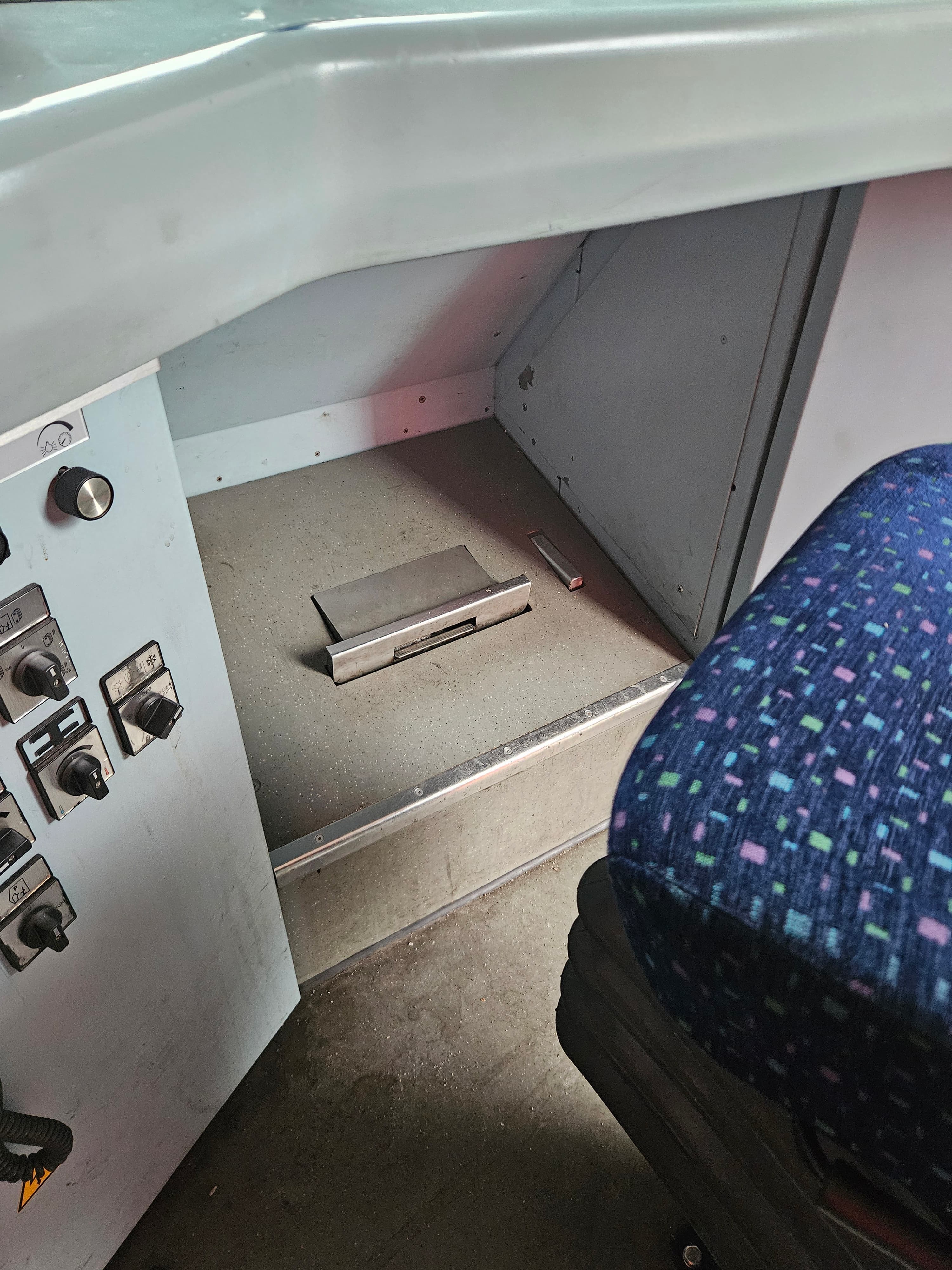
Classic foot pedal - the most frequently used Sifa solution on the 185 series.
The Sifa continuously monitors the train driver's activity. At defined intervals, conscious interaction via a pedal or button is required. If this confirmation is given, operations continue as planned. If it is not given, the system first gives a visual signal, then an acoustic signal – clear, unambiguous and leaving no room for interpretation. If the train driver does not respond, the Sifa automatically brings the train to a safe stop.
The added value of this vigilance principle is particularly evident on long, uniform routes. The Sifa does not monitor the quality of attention – that is the task of other safety systems.
It fulfils two central functions:
- Firstly, it checks whether the vehicle is actually being actively operated. If there is no response, the Sifa reacts immediately.
- Secondly, it ensures that the train driver remains capable of acting. If there is no response, a step-by-step procedure is followed: after about 30 seconds, the visual warning via the indicator light begins, after another three seconds the warning tone sounds, and another three seconds later the emergency brake intervention takes place. This ensures that the vehicle is stopped safely if the train driver is unable to respond.
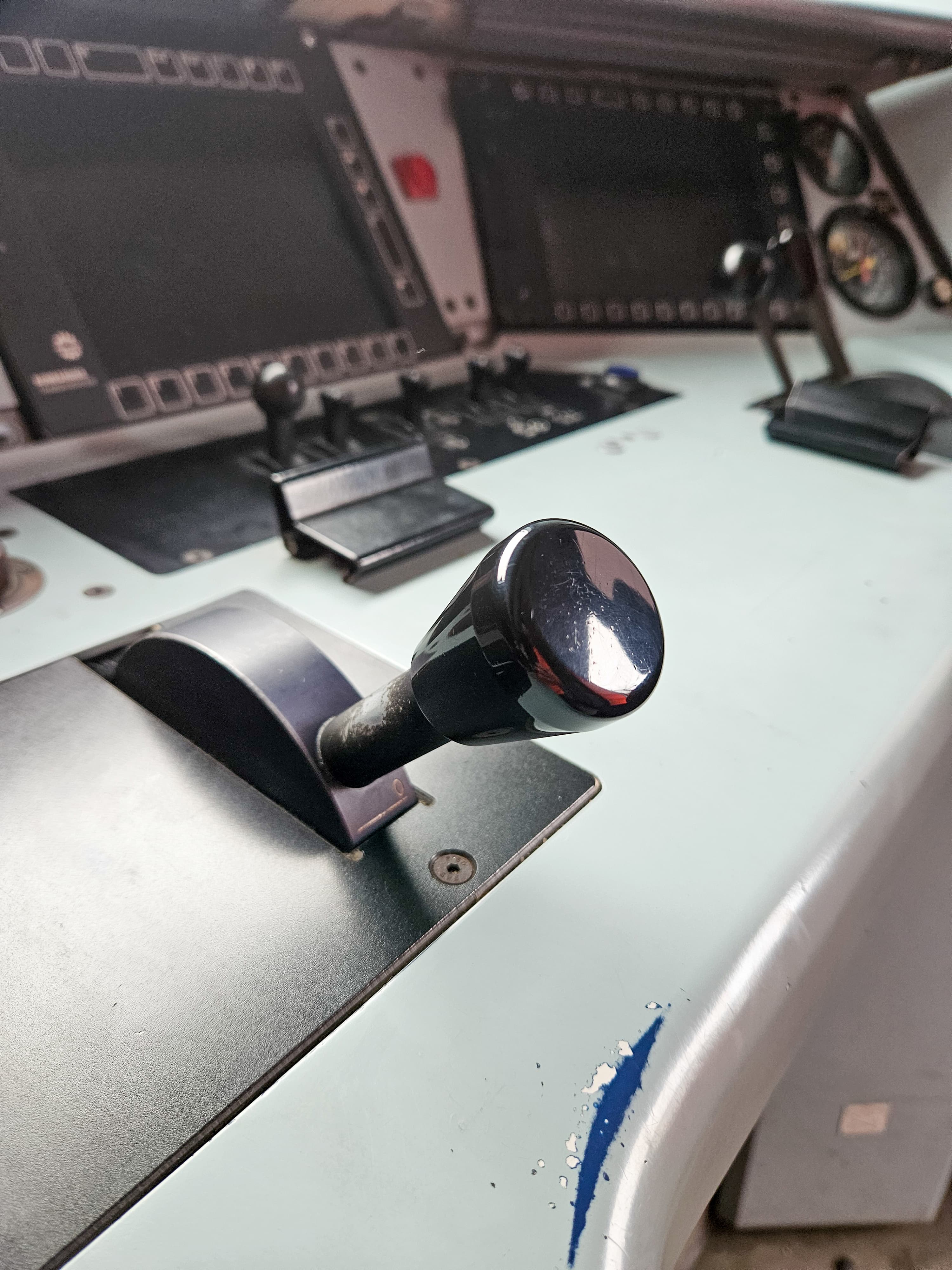
Drive switch with integrated Sifa button - alternative operating option directly on the control instrument.
The Sifa is therefore not a substitute for trackside safety technology, but a personal safety measure in the driver's cab: it ensures that someone is there – and remains capable of acting.
This principle is not a special national model. International counterparts such as VACMA in France, DSD in Great Britain and the Alerter in the USA follow the same basic idea: ensure the ability to act, stop safely in case of doubt. Differences exist in the specific design – for example, in acknowledgement intervals, warning logic or controls, but not in the safety approach.
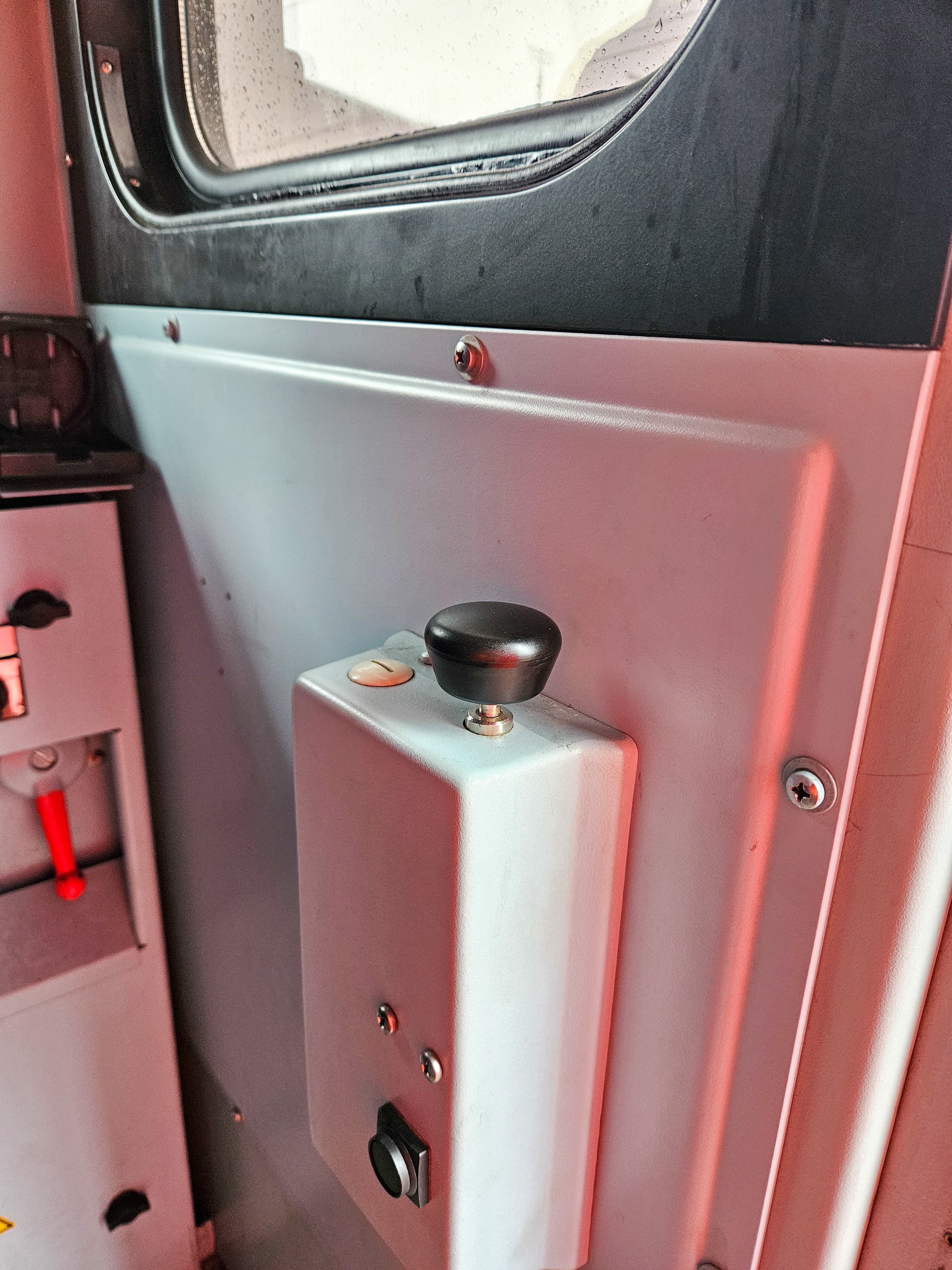
Side button - used when the train driver has to watch the train out of the side window, for example, as it departs.
EU perspective and harmonisation
At European level, standards such as ERA and TSI are primarily aimed at interoperability and the cross-border use of vehicles. However, vigilance systems such as Sifa are implemented on the vehicle side. Historically grown fleets, national regulations, ergonomic concepts and approval traditions explain why pedal and button solutions or time windows differ.
With increasing digitalisation and standardised interfaces, especially in the ETCS environment, these differences are gradually diminishing. The basic principle of vigilance monitoring remains unchanged: humans are considered an independent safety-relevant factor – and are supported by technology.
Differentiation from other safety systems
Sifa monitors humans, while other systems focus on other areas. They control signals, speeds or driving commands and intervene in the event of deviations. Only the interaction of both levels – vigilance (human) plus control/signal monitoring – creates a multi-layered safety concept that stabilises operations and effectively limits risks.
Practical thinking
A long, straight section of track. Few external stimuli, smooth running. The Sifa reports in – visibly, audibly, reliably. A short impulse, and the journey continues at the intended pace. If there is no response, the system intervenes and brings the train to a controlled halt. For operations, this means: safety before speed, reliability before risk.
The Sifa ensures operational capability, provides clear warnings and brakes automatically if necessary – a key element for safe and stable railway operations.
 Go
Go