
12. May 2026, 00:00 o'Clock
Article: DB Intermodal Services and TFG Transfracht are investing in high-performance mobile charging infrastructure for electric lorries
Electrification in combined transport: Up to 800 kW charging capacity despite limited grid connection at the Großbeeren site
Electrification in road haulage is advancing technologically – yet in operational implementation, the charging infrastructure remains a limiting factor. In combined transport in particular, increasing demands for charging power clash with existing grid restrictions and complex approval processes.
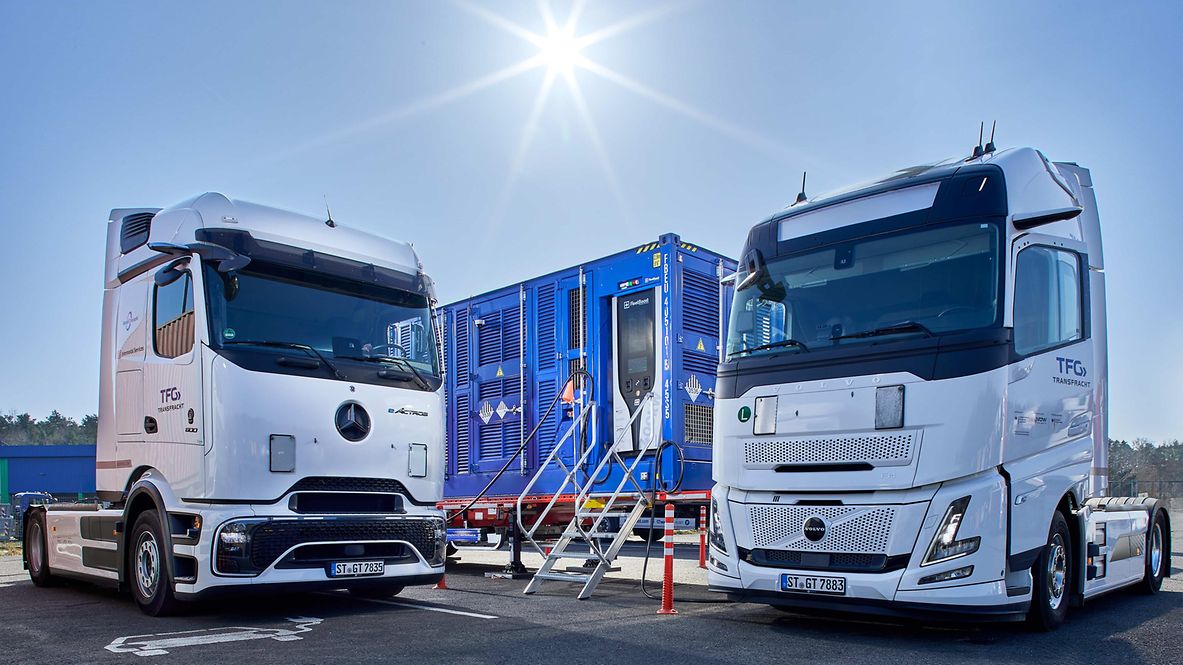
Against this backdrop, DB Intermodal Services and TFG Transfracht are relying on a mobile high-performance solution at the DB IS depot in Großbeeren. With the FleetBooster 40 from the start-up FleetBoost, a charging infrastructure is being deployed there for the first time in regular operation that functions independently of traditional grid expansion processes.
In practical use, the operational added value is clear: despite an existing grid connection of just 100 kW, charging capacities of up to 800 kW are achieved. The basis for this is a mobile battery storage system with integrated energy management. Energy is continuously absorbed and, when required, delivered at high power, decoupled from local grid capacity.
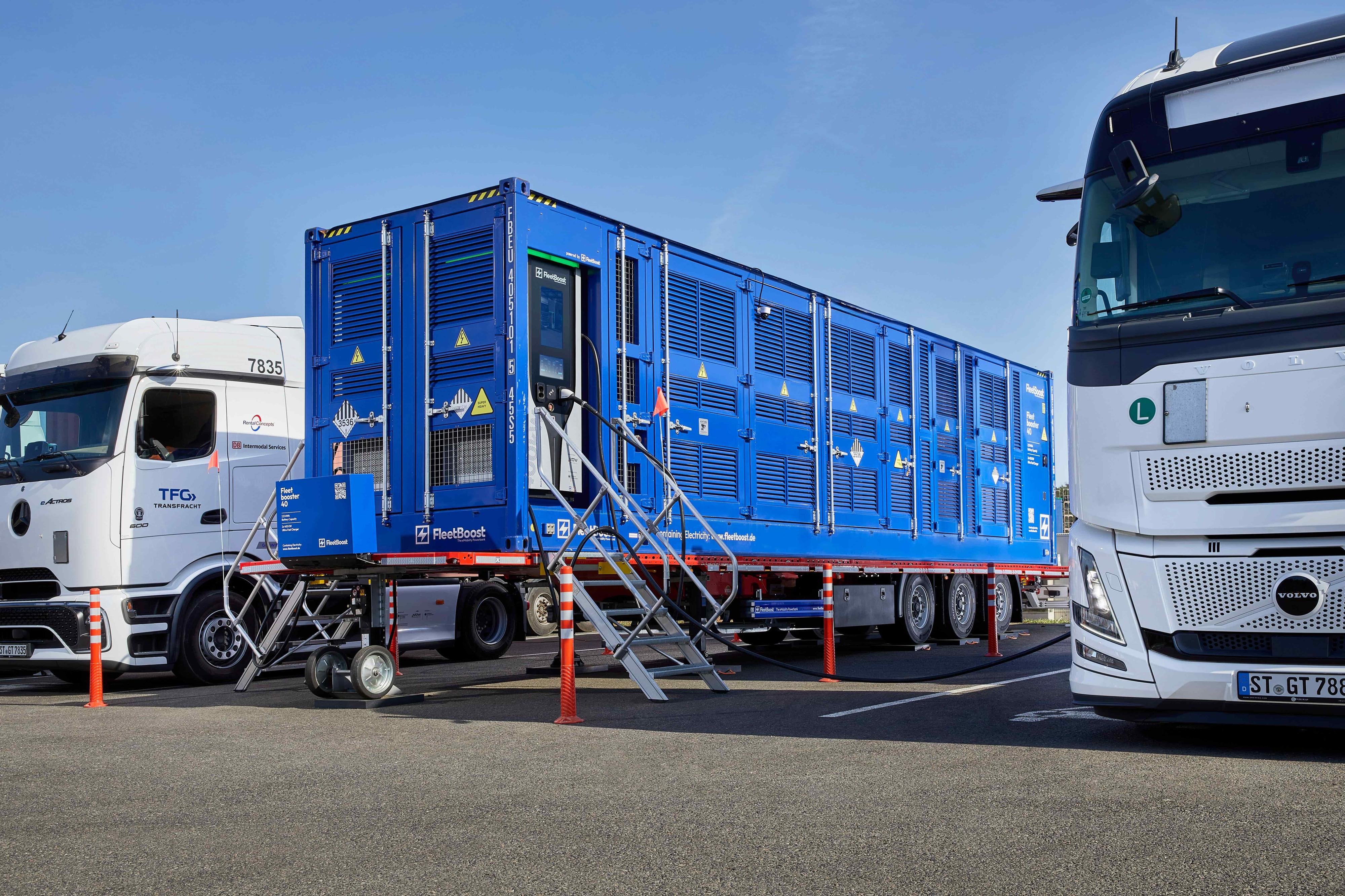
Mobile high-power charging infrastructure in practical use: The FleetBooster 40 enables fast charging of electric lorries independently of local grid capacity at the Großbeeren site.
For combined transport operations, this approach creates additional flexibility in the pre- and post-haul stages. Charging processes can be integrated into tightly scheduled workflows without having to wait for infrastructural adjustments. In addition to electric lorries, handling equipment and reefer containers can also be charged directly on site.
A key advantage lies in scalability. The mobile solution can be implemented at short notice and scaled up in line with fleet growth. At the same time, there is no need for investment in permanent grid infrastructure or lengthy approval procedures. This reduces complexity and speeds up the implementation of fleet electrification.
The deployment in Großbeeren demonstrates how existing site constraints can be pragmatically overcome. Mobile energy storage systems enable step-by-step electrification under real operating conditions, thereby strengthening the performance of combined transport both in the pre- and post-haul stages of rail-road operations – that is, on the first and last mile on the road. This allows transport processes to be designed flexibly and sustainably, even where infrastructure constraints exist.
 Go
Go